January 1st; Not Hanging Around
We wanted to see something different to start the New Year so had scoured the bird news for possible birds to see. The obvious target would be the Belted Kingfisher in Lancashire but we decided that on New Year's Day it would be very busy and I didn't really fancy the arduous drive home. We will go to see the Kingfisher but it will be when we're prepared for it. Another possible was a Pacific Diver in South Wales but that twitch is apparently problematic so that one was also shelved for another day. Both birds will likely be around all winter and will hopefully still be available into early spring. As I mentioned in my later blogs of 2021, I've lost quite a bit of my twitching drive recently, it's a daft practise really, but one that many enjoy and I'm sure I'll recover my own motivation to see the rarest birds again someday soon. So in the end, but only after I'd risen early on New Year's morning and made yet another typically late decision, we plumped for a bit of early year ticking instead. We hadn't seen Penduline Tits since the end of 2017, a single bird that frequented a pair of tiny ponds next to a housing estate in Gloucester. Even back then my indecisive nature had almost cost us that sighting since two birds had previously been present on another site just a few miles away but I had dragged my heels for far too long and had never made it to see them. I was saved by the singleton being found a week or so after the pair had left the original site. Before that sighting the only Penduline's we had seen was a trio of the birds in the Westwood Marshes near Minsmere some twenty years ago. Last winter three Penduline Tits had overwintered at Weston Airfield on the outskirts of Weston-Super-Mare in North Somerset and remarkably the same three birds (or by incredible coincidence and very unlikely, another three) had returned to the same site this winter. At under two hours drive from home this would do us nicely for the day and there were other options nearby and on the way back for additional difficult to get year ticks.
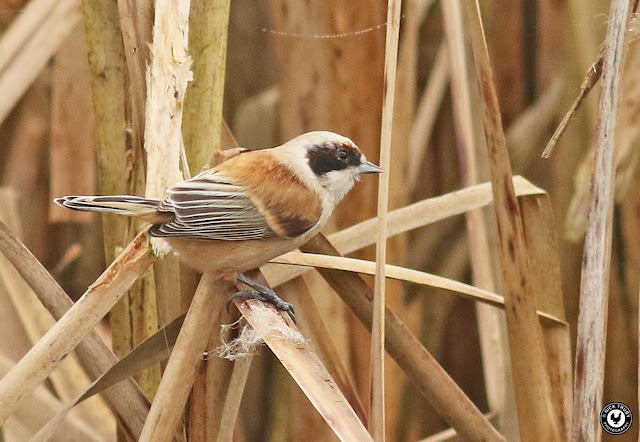 |
| Penduline Tit, Gloucester 20/12/2017 |
I had been in touch a few weeks before with a friend (thank you Penny) who lives close to Weston and had received the details of where to park and how to get to the airfield so I knew exactly where to go once we'd got there. The drive was an absolute delight, the empty roads had me reminiscing of past times spent joyfully driving around deserted Scottish roads until some idiot dreamt up the North Coast 500 nightmare. In well under two hours we had arrived and parked in the designated spot. Thereafter it all became a little bit trickier. Weston-Super-Mare is renowned as being a muddy place, the beach anyway is famed for being a vast expanse of mud. Most Severn Estuary seaside towns possess mud saturated sandy beaches. On arriving at a gap in the fence, our access to the airfield, we stared at a right messy footpath that led across a bund between two recently dug ponds, installed as part of a huge housing development that is being built on the edge of the airfield. The extremely muddy path led towards a reed filled area where the Penduline Tits were supposed to be and indeed about half a mile distant we could see around a dozen other birders looking over the reedbed. To join them we just had to negotiate a couple of hundred yards of extremely slippery and cloying sticky wet clay first. We took it very steadily across the swamp of rather foul smelling mud taking extreme care not to end up upside-down and covered in the stuff and even more care not to end up sliding down the newly constructed banks and into the stagnant grey water of the new ponds below. After what seemed like an age we emerged at the other of the mud path unscathed and now had another very muddy path to negotiate but that one was at least on a grass base and was somewhat easier to walk on. Because all of the other birders were watching the same patch of reedbed we assumed that the Penduline Tits were showing so we were disappointed to hear from a chap walking back towards us that they hadn't been seen so far. We took a spot overlooking the main lagoon of the reedbeds and watched for any movement within it.
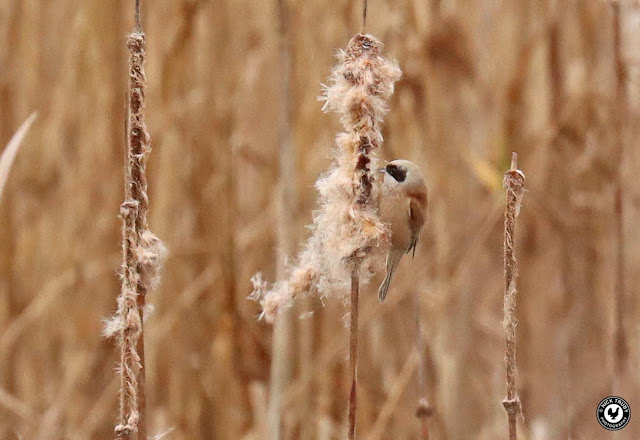
Penduline Tits are small, maybe even slightly smaller even than a Blue Tit, so spotting them wouldn't be easy. They are also well camouflaged bearing colours and plumage patterns that remarkably resemble the bullrushes that they feed upon. The plumage of buff underparts with a reddish-brown back and grey crown and nape, all coupled with a black face mask make them appear almost like a miniature Red-backed Shrike. The bill though is Goldfinch like, pointed and conical and is used like tweezers to tease grubs and maggots out of the bullrush heads. To that end it pulls the cotton like covering of the rushes out and discards it, and it's the "cotton ball snow flurry" coming from a specific bullrush, that gives them away before you actually see the bird. We studied every patch of bullrushes that we could see for the next half hour or so but the only birds in them were a pair of Stonechats which, on the first day of January, is still good to see since every bird is new. We added Cetti's warbler and Common Chiffchaff and then a Water Rail when one jumped into the air before landing back with a splash. As I began to get a bit twitchy, a fellow birder further along the track and back towards where we had parked hollered, "I've got them!"
We moved as quickly as we could through the sludgy mud, which wasn't very fast at all and most of the other birders comfortably overtook us although one of them slipped and ended up with muddied knees. When we arrived at the spot the focus of attention was on a thin strip of bullrushes about thirty metres away. We were helpfully directed onto the birds which were busily feeding away. I set the scope up for Mrs Caley to view the birds and then set about trying to get some record shots which actually proved trickier than expected because of that aforementioned camouflage that the Penduline Tits have. Incidentally Penduline is a word of limited use which is only applied to birds that make hanging nests and it means, "of a pendant". It could have equally been assigned to the manner in which the Penduline Tits fed at times when they would deftly hang upside down to get to the best bits of the rushes. Mostly though the birds were the correct way up and I was able to gain some record shots at least.


After we'd watched the Penduline Tits for maybe fifteen minutes or so the birds moved along the bed of rushes and disappeared behind some tall phragmites. They didn't instantly reappear so we decided that we'd disappear with them and made the slog through the mud back to the car. We had other targets to get.
Our next stop was to Barrow Gurney Reservoirs on the outskirts of Bristol and just half an hour away from Weston. A male Long-tailed Duck has made the reservoirs there its winter home for the last few years now and it's the easiest way for inland birders like us to year tick one of the most delightful of duck species. The reservoirs are bisected by the usually busy A38 trunk road but it being New Year's Day there was hardly any traffic so crossing it to reach the number two tank, where I knew the duck would be, from the carpark was easy for once. Tank number two (there are three in all, imaginatively numbered one, two and three) lies at the top of a steep set of steeps which seemed to be much more eroded and dangerous than on my last visit when I managed to gash my leg on one of the exposed bolts so we both took great care this time. On reaching the waters edge it was clear that the Long-tailed Duck wasn't anywhere near so I upped telescope and scanned the far side. The Long-tail was right tight up against the bank cavorting with a small group of Tufted Ducks. It's possible to walk around the reservoir but we had limited time if we were to see anything else so we opted out of that.
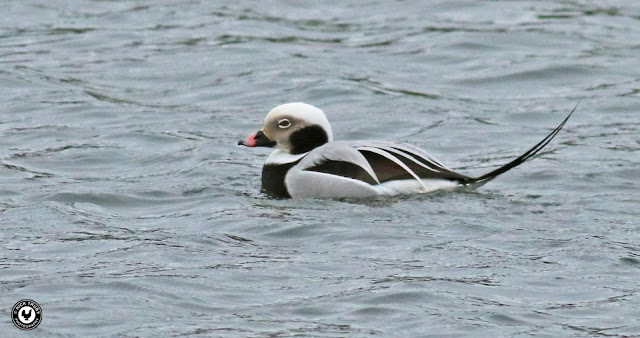 |
| Long-tailed Duck, Barrow Gurney Reservoir, 14/03/2020 |
Our next intended stop was Slimbridge WWT which was about an hours drive north and, again because of the reduced traffic, we were able to easily traverse Bristol by heading straight through the city centre. I'm sure that lots of folk love Bristol but I was far from impressed, the amount of graffiti adorning every possible available surface was eye-catching but unsightly and there was rubbish strewn everywhere. It reminded me of many of the European cities that I've visited although most of those are kept scrupulously clean and tidy litter wise. We arrived at Slimbridge and stopped at the canal bridge where a Glossy Ibis had been reported. Unfortunately we couldn't spot it and later learned that it had flown back into the Wetlands centre. Our intended visit to the WWT also got the thumbs down when it became clear that it must have been rammed judging by the amount of cars in the carpark and by the number of small children running amok on the approaches to the entrance. A queue to get in fifty yards long was the deciding factor in us turning round and heading elsewhere. We'd visit again when it would be quieter. I always thought that most people stayed at home on New Year's Day nursing hangovers, not any more it would seem. A short way from Slimbridge is a well known tree that a male Tawny Owl uses as its roost. The Owl is normally there between December and March and I had already seen a few tweets of its presence this winter. Sure enough the Tawny was in its hole, created by a large limb of the tree breaking off and was, for the first time since we'd been visiting him, completely emerged so that we could see him in all his glory. The warming afternoon sunshine that we were enjoying was obviously also a relish for the Owl.

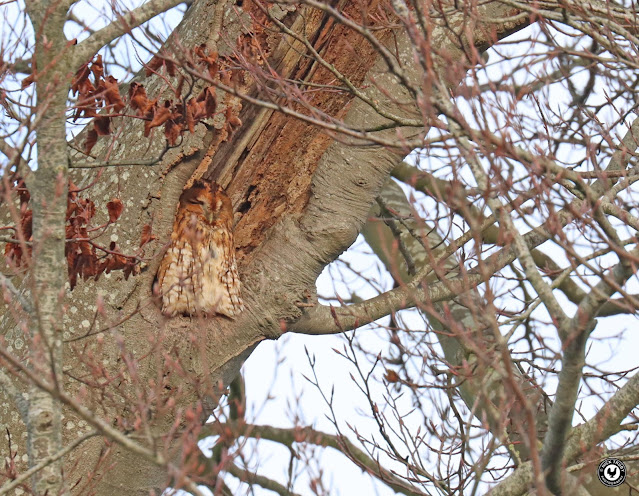 |
| Tawny Owl |
It was just past two o'clock and we had a decision to make. We could head straight home or we could fly in the face of our resolution of, "Not year listing" and head to the outskirts of Reading where we'd been the day before to see the Velvet Scoter again. Well, New Year's resolutions are there to be broken so in the dimming light we stood watching our second hard to get sea-duck of the day. It will save searching one out later in the year if we do go mad for it again.
We'd had a good day and a good start to our 2022 year. We could have gotten more different birds of course but my policy to begin this year is to see some of the scarcer birds available and preferably most of the winter visitors in the first part of the year rather than wait until near the end.
Birds seen for the year list (on which all birds count equal) and in no particular order;
1) Robin, 2) Red Kite, 3) Buzzard, 4) Lesser Black-backed Gull, 5) Black-headed Gull, 6) Stonechat, 7) Wood Pigeon, 8) Starling, 9) Blackbird, 10) Dunnock, 11) Penduline Tit, 12) Wigeon, 13) Water Rail, 14) Grey Heron, 15) Herring Gull, 16) Cetti's Warbler, 17) Common Chiffchaff, 18) Pied Wagtail, 19) Meadow Pipit, 20) Kestrel, 21) Magpie, 22) Rook, 23) Carrion Crow, 24) Jackdaw, 25) Common Snipe, 26) Redshank, 27) Reed Bunting, 28) House Sparrow, 29) Long-tailed Duck, 30) Tufted Duck, 31) Coot, 32) Mallard, 33) Common Gull, 34) Tawny Owl, 35)Velvet Scoter, 36) Mute Swan
January 2nd; Ducking & Diving
We were staying local after the travelling of the previous day and intended "mopping" up some of the longer staying winter visitors to our area, just in case any of them disappeared soon (which they probably wouldn't but obviously could). Our first port of call was to Thrupp Lake at Radley south of Oxford. This is the domain of our good friend Mark (The Early Birder) who we had arranged to meet but for once we had arrived before him. It was barely getting light when we logged our first new birds for the year of the day with Blue and Great Tits that were already actively searching out their breakfasts. The bird we were hoping to see was a Ring-necked Duck which we'd similarly seen on New Year's Day last year and which had returned to the area to winter once more. As the light intensity increased we made our way to the edge of the largest lake in the complex of many and peered out over the water. It was far too dark for photography so we just scanned looking for species to add to the year list. The next worthy additions were a pair of Goosanders (which flew off shortly afterwards) and three Egyptian Geese. Many common duck species followed but there was still no sign of the sought after bird. Mark arrived and almost immediately I spotted the Ring-necked Duck, a fine male, when it appeared at the edge of one of the weed covered islands.
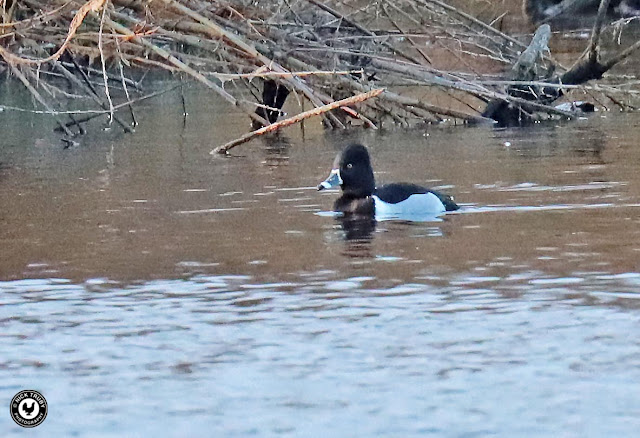 |
| Ring-necked Duck |
We watched the North American Ring-necked Duck at leisure while we chattered and enjoyed the fine and sunny start to the day. More friends joined us at the waterside, Kyle, Kev and Adrian and then the second Mark of the day (a Pidgeon that I can't count though). All had come to see the Ring-necked Duck which had of course disappeared. Luckily for them it wasn't off view for too long. We left them all admiring the smart little duck and checked the rest of the lake, hoping but failing to locate a previously reported Mandarin Duck, but adding a few more of the more common species.
The recce done with we headed up to Farmoor Reservoir to see another couple of Oxon's longer staying winter visitors. The mere fact that we were doing that rather belied our resolution not to year list this time but it's nice to see good birds at any time and fun to find them. The site was very busy with recreationists and there was a full regatta taking place on F2, the larger of the two reservoirs. The birds we were looking for are usually found on F1 but we could see no sign of either as we walked along the causeway that divides the two concrete basins. The three musketeers from earlier caught us up and we enjoyed a decent social as we collectively searched for birds. One of us announced that he had found one of the Greater Scaups that I was looking for but closer inspection revealed that it was the white face blaze of a female Tufted Duck that had us all fooled for a minute or so. I guess that Tufted Ducks such as that one are often misidentified as female Greater Scaup especially when seen front on.
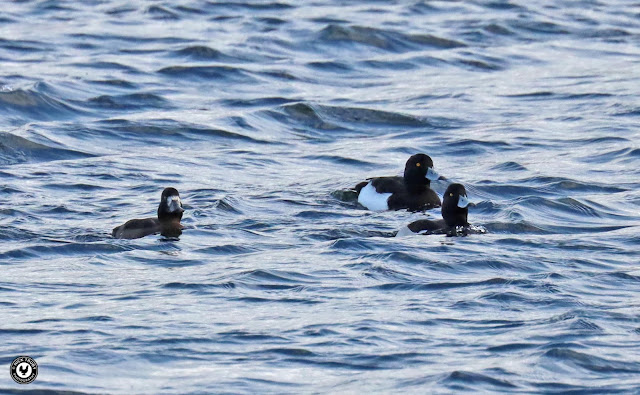 |
| Tufted Ducks |
While our friends continued to scrutinise the few Tufted Ducks that were around in the hope that the Scaup would be amongst them, I scanned further out on the water and, as I suspected earlier when I thought I'd seen it as I walked the causeway, on the far side of the reservoir I found the other bird that I was hoping for. The juvenile Great Northern Diver (GND) that had been delighting birders and toggers alike for the last three weeks was floating serenely close to the bank in the north-western corner. We'd seen this bird a few times since it arrived and it had never ever been in that part of F1 before. I alerted the others and we all had our year tick.
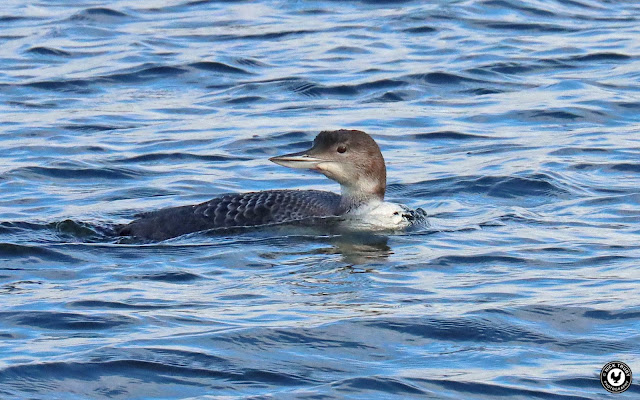 |
| Great Northern Diver |
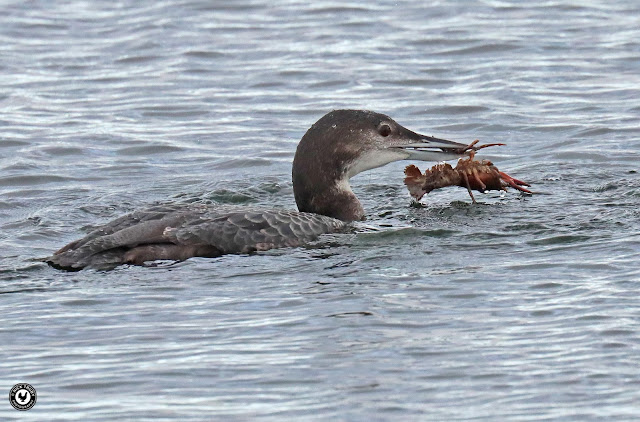
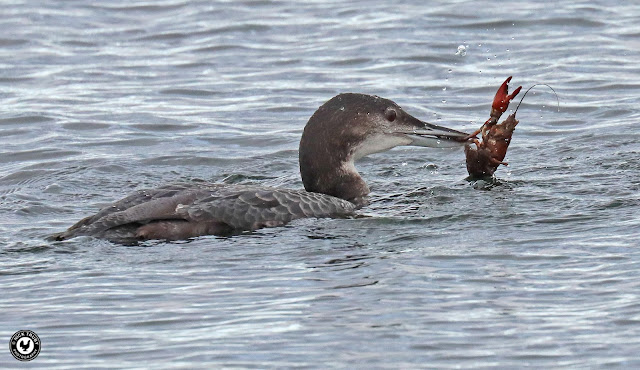
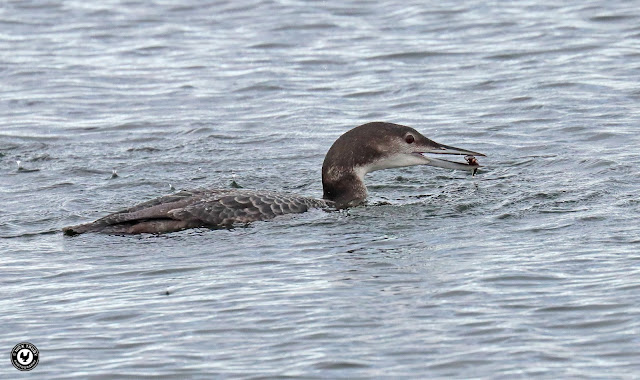
By the time we had caught up alongside the Diver it had of course dived and when it resurfaced, the bird was capable of being submerged for a minute or more, it had moved further out and was heading back towards the causeway. I think that birds know exactly what they're doing when they lead the birdwatcher a merry dance. I'd heard that the GND had a fondness for the invasive Signal Crayfish that seemingly proliferate in the reservoirs and I was keen to see it handling one and how it managed to dispatch it. Blinkers on, we tracked the GND as it sailed across to the causeway and began diving close to the Cormorant bearing rafts. We'd learn a short while later that we should have taken more notice of the other birds around but those Diver tinted spectacles had taken over. For now though we had arrived in time to see the GND swallow a Crayfish which, being a fairly large animal itself, looked as if it wasn't that easy to consume judging by the bulge in the Diver's throat.


The Diver took a while to compose itself after its meal and took time out to preen and prepare itself for future fishing sorties. Unlike the Cormorants which are definitely not loved by the fishing fraternity, the Diver will be much admired by the anglers and Thames Water for doing its best to rid the reservoir of as many of the non-native Crayfish as possible. The Diver then obliged by giving me a front on wing stretch which I duly accepted and I took a whole series of photos.


We watched the GND submerge again but it came up empty billed. That unsuccessful dive was repeated and we wondered if it had lost its touch just as the day had lost the earlier sunshine and we were plunged back into the greyness and murk that seems to have lasted for the last month and a half. On the third dive the GND scored and triumphantly emerged with a Crayfish. Interestingly it was actually a subdued resurfacing, I imagine that because the Diver had food it didn't want to immediately advertise that fact so it kept very low in the water until it had checked out for any other birds that may have more than a passing interest in stealing it. Once the coast was deemed clear the GND set about dealing with the prey which it did so in almost crocodilian fashion whereby it tossed and shook the Crayfish violently until the pincers snapped off, leaving the body and tail parts which were eaten with gusto. Once the Crayfish had been eaten I thought that the Diver had a very satisfied look on its face.


Kev phoned me to say that he'd found the real Greater Scaup in the north-western corner of F2, presumably it had flown in while we were watching the Diver, so we headed back to see it for ourselves, passing the others going in the opposite direction as they made their way to enjoy the Diver spectacle. Kev said the Scaup was with a flock of Tufted Ducks, it always is, close to the floating pontoon and sure enough it was. The whole flock of Ducks were definitely not there when we had passed that spot just fifteen minutes before.
The sun burst out from behind the clouds and illuminated the Scaup beautifully. Greater Scaup are rather beautiful ducks with very finely vermiculated back feathering and in the case of the females as this one was, a large white surround to the bill which only has a tiny small black nib as opposed to the larger nail of the Tufted Duck. The Scaup also lacks the tufted crown of its cousin, and instead has a larger and more rounded head profile. The Scaup actually swam towards my position on the bank and had a yawn and a scratch of the head but you could caption the shots with, "What's that mate?" and "Oh, duck off!"
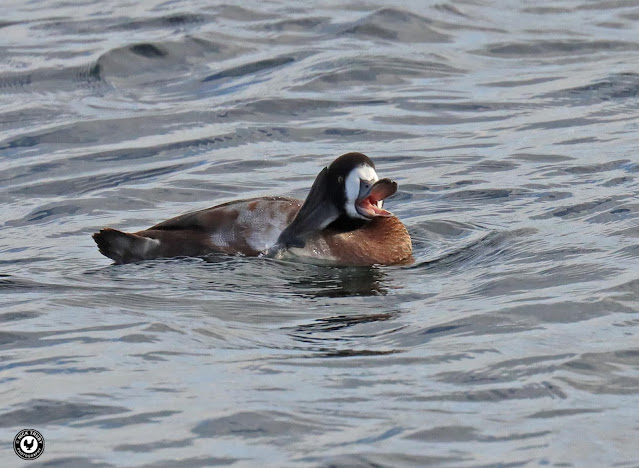 |
| Greater Scaup |
Then a moment of good fortune, for me the bird photographer, when one of the windsurfing dudes on the reservoir lost control of his board and came careering towards the bank and the flock of ducks which naturally panicked and took flight. I'd dreamt (sad life I lead) of grabbing some shots of a flying Scaup and now I had my chance. An opportunity that even I couldn't pass up considering that the bird was so close, the sun was shining and I was already focussed on the Scaup anyway. I was absolutely delighted with some of the images and later that day forgot my New Year's resolution of not posting any photos onto BirdGuides by submitting a couple Am I surprised that neither received an accolade in the Photo of the Week stakes? Of course I'm ducking not! I really don't know why I ducking bother. Equipment bias and the clique-clique set, reign supreme still.


We rejoined the Banbury Boys at the Diver and Kyle (Birdwatch Britannia) showed me some terrific back of camera photos of the Crayfish cruncher taken during the brief window of sunshine. I retaliated by showing off a flying Scaup pic. Touché! It was time to take a few more Diver eats Crayfish photos and over the next ten minutes or so the GND caught and ate another three. To watch it thrash the Crayfish about to separate the parts was really entertaining and informative, something I'd never witnessed before that day.
After all the effort, The Diver relaxed and went back to floating serenely on the water again, probably fat and full up. It is a beautiful, big beast of a bird and deserves the continual attention that its getting. I just sincerely hope that it doesn't suffer the same fate as the last GND at Farmoor and fall victim to a discarded fishing hook.
Year List additions;
37) Egyptian Goose, 38) Goosander, 39) Gadwall, 40) Shoveler, 41) Moorhen, 42) Little Grebe, 43) Cormorant, 44) Great Crested Grebe, 45) Teal, 46) Ring-necked Duck, 47) Blue Tit, 48) Great Tit, 49) Coal Tit, 50) Canada Goose, 51) Pochard, 52) Great Northern Diver, 53) Greater Scaup, 54) Greylag Goose, 55) Goldfinch, 56) Collared Dove
January 3rd; Ground-YBW Day!
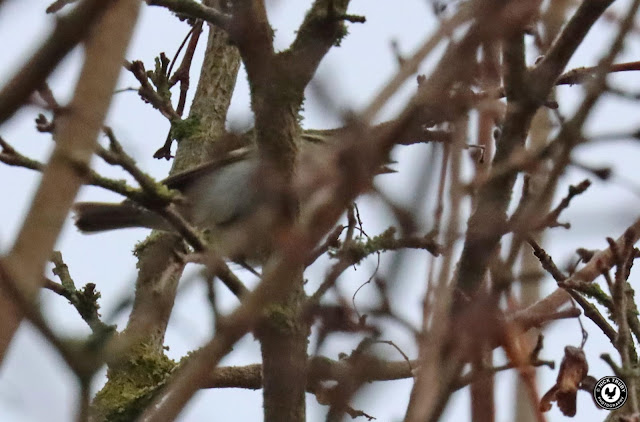
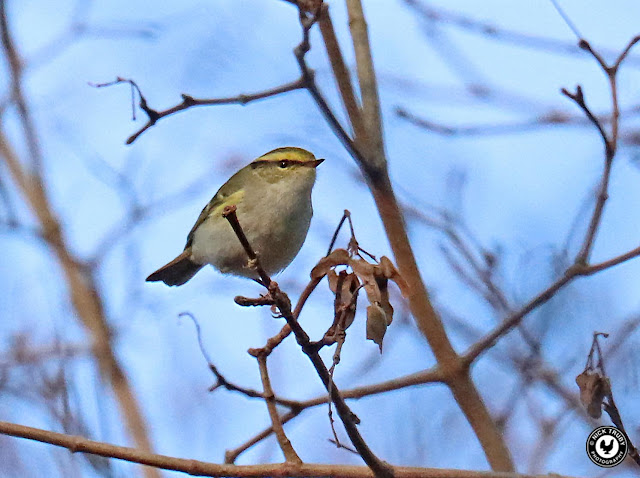
In 2021 during lockdown when we were supposed to stay at home unless it was for work purposes or essential reasons, I genuinely had some work to attend to in Aylesbury. Luckily I was able to park the car in Watermead and walk to the job that needed looking at and take a walk afterwards, for exercise of course, around the lake and look for a Yellow-browed Warbler (YBW) that was wintering there. We had already seen that bird a few weeks previously (in 2020) so knew exactly where to look for it since it was still frequenting the same few trees. We had also seen an overwintering YBW in 2019 on the 27th of January in the Cotswold Water Park. One day somebody will find one in Oxfordshire during the winter months.
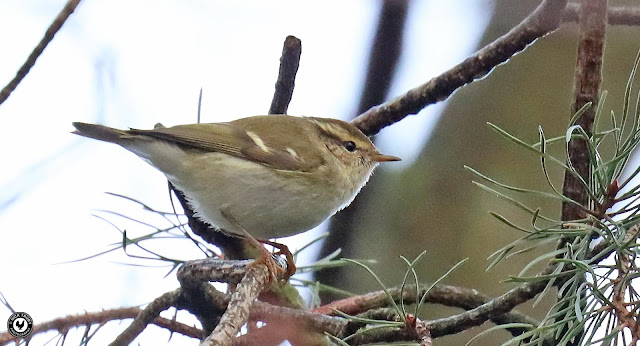 |
| Yellow-browed warbler, Aylesbury, 03/01/2021 |
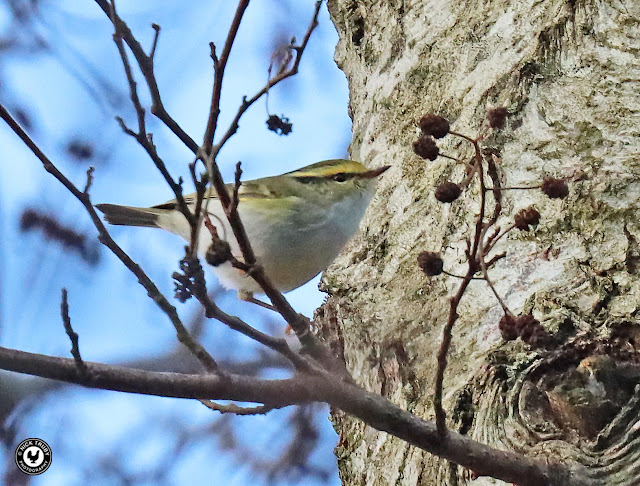
Roll on to the same date this year and another Yellow-browed twitch. No lockdowns to keep us reigned in this time either. One had been discovered in a country park at Milton, near to Cambridge before Christmas and was still holding fort there. Cambridge is only an hour and a half's drive for us and we'd have the opportunity to go somewhere else after wards to see other birds. Yellow-browed Warblers are amongst my favourite of all birds, years of searching for them and enjoying their frantic antics on many Cornwall holidays have left an indelible mark on my birdy brain.
We parked outside of the country park carpark and saved a fiver for our troubles. It was a ten minute walk to the Yellow-browed Warblers favoured area and we joined another three birders who were already scanning the trees and bushes for the bird. The area of woodland was compact with a mix of dense scrub and wispy trees. It was bordered by a stream on its northern edge where a footbridge led into another wooded area with taller ivy covered trees and a lake beyond. The eastern side was guarded by a railway line and the southern by the A14 trunk road. Even on a Bank Holiday Monday it wasn't particularly quiet and I wondered, as I often do, that birds really aren't that fussy when it comes to picking a place to stay. Of more importance to a YBW of course, is the abundance of insect food and a spot like this with a stream and lakes will house a lot more of that than gardens and other wooded spots. In fact all of the overwintering YBW's that I've seen have all been in similar habitats, all near to water. Mrs Caley pointed out that the species loves ivy covered trees too and that we should be looking in the wood where the ivy grew so that's where we started our search. We quickly found a few Chiffchaffs and one looked pretty good for a Siberian "tristis" but it was lost to view quickly before I could get a photo or more than a brief look at it but it was certainly "milky tea" coloured. It was going to be tricky to get a good view of anything in this place, there was so much cover, and the low light levels at the early hour didn't lend to decent photography, even if I could have got onto anything to photograph which I didn't. We began wandering, it doesn't always pay to stay staring at the same trees. I often remind myself of a time in Porthgwarra when we joined about fifty others looking into a single bush for a Red-eyed Vireo because that was where it had been seen just half an hour before we arrived but after ten minutes of no sign I thought we should check other likely spots and just minutes later had refound the bird about a hundred yards away! Birds can easily move through undergrowth undetected.
More birders arrived, including some locals who had seen the YBW before, and the consensus was that it had been seen in a corner of the wood bordered by the railway and road so we altered our search area to there. One guy said that he'd seen the YBW briefly in the top of a tall tree and another said he'd seen a Siberian Chiffchaff in the same tree but we saw nothing other than our first Great Spotted Woodpecker and Treecreeper of the year. A country park ranger arrived and told us that on New Year's Day the bird was seen a lot in the ivy covered trees by the footbridge! We didn't know where to look. After two hours our patience was wearing thin, we had plans to go elsewhere after lunch, it was nearing eleven o'clock so we gave ourselves until midday then we'd leave. The time crept on with no sightings until a birder came casually walking towards us and announced he'd seen the YBW in a hedge alongside the lake and he had a photo to prove it! That hedge was a spot that we hadn't looked at all except when we walked past it as we arrived. A minute later and another chap, one of the original birders on site when we arrived, shouted, "It's there, in the ivy" and pointed to a tree right above the footbridge about seventy-five yards from the aforementioned hedge. We should have stuck with the ivy covered trees.
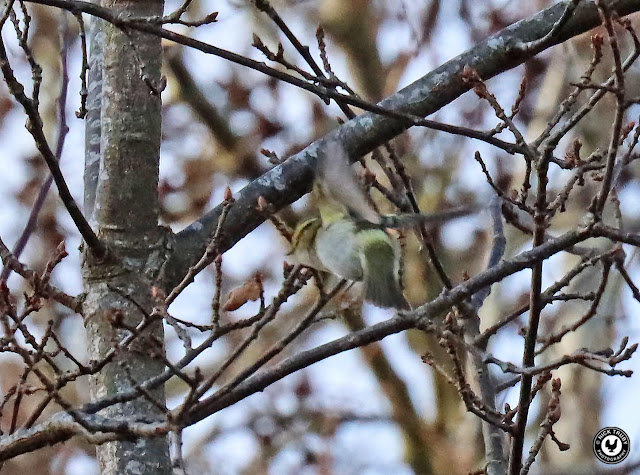
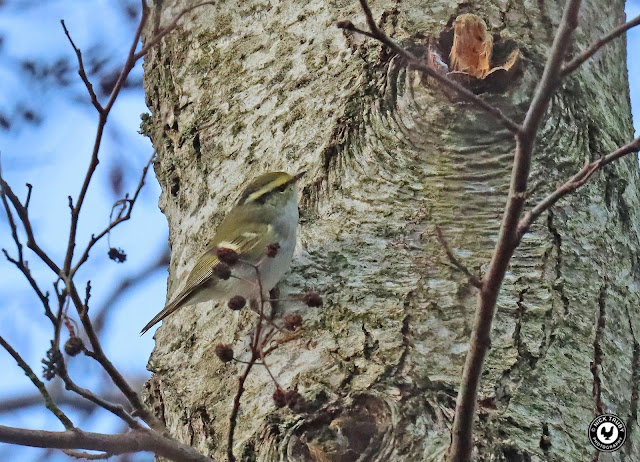
Incredibly we couldn't see the YBW at all even though it was only twenty feet above our heads. It was secreted superbly in the ivy but we did hear it call twice, "Tsweeeet, tsweeeet" so we knew it was up there somewhere. Then just as I garnered a bit of movement and adjusted my binoculars to the spot, the YBW flew out over our heads and back towards the hedge again. Only a brief view but I've seen enough YBW's to know it was it, the whitish belly is very apparent even in dingy light. Nobody could see where the bird had flown to so the birders all strung out again between the footbridge and the part of the hedge where it had been seen earlier. Nothing stirred in the trees where we were looking and for a good ten minutes there was no sign of the YBW by anybody. The it was finally my turn for some luck which was well overdue since I pride myself on usually being able to pick birds like the YBW quickly and relatively easily. A small group of Long-tailed Tits came towards us through the trees and the YBW emerged from my right to perch openly on a branch just a few yards away. My camera settings were all wrong and I managed to mis-focus on the bird. I altered the focus from a single spot to nine to give me more cover and when the YBW emerged into view, partly obscured by ivy leaves I at least got some record shots.


We, and a few others, followed the YBW for a few more precious seconds, at one point it stayed still for slightly clearer shots although they were taken from almost directly underneath. I was still shooting when the warbler flew out strongly and away back into the trees. It had taken us almost three hours to get meagre views of the Yellow-browed Warbler but it will still go down as one of my favourite birds of the year. They are superb little birds.


We drove north-westwards towards to the "in place" for Owl watchers, Eldernell just to the east of Peterborough. Our more local spots for seeing Short-eared Owls in the Cotswolds and the Oxon Downs have seen pretty poor returns over the last couple of years and last year we struggled to add the species to our year list eventually getting some at Frampton Marsh as late as August. Eldernell sits on the Nene Washes and has become famous as a great place to see Shorties and, if lucky, Long-eared Owls as well. Throw in resident Barn Owls and it really is the place to go for Owls. As we left the outskirts of Cambridge I mentioned to Mrs Caley that we should keep our eyes peeled for flocks of Swans in the fields as we neared Eldernell. We would be passing within a few miles of Welney WWT which is home to hundreds of Whooper Swans in the winter and lots of them spend much of the daylight hours feeding in beet fields. Lo and behold as we drove along another dead straight road in the middle of Fenland nowhere I spotted three groups of swans in a roadside field. I pulled up in a very convenient lay-by and checked the nearest group of sixteen swans and confirmed that they were indeed Whoopers. Another potentially tricky year tick gained early for once. The other two larger herds were also Whooper Swans, numbering around two hundred birds in all.
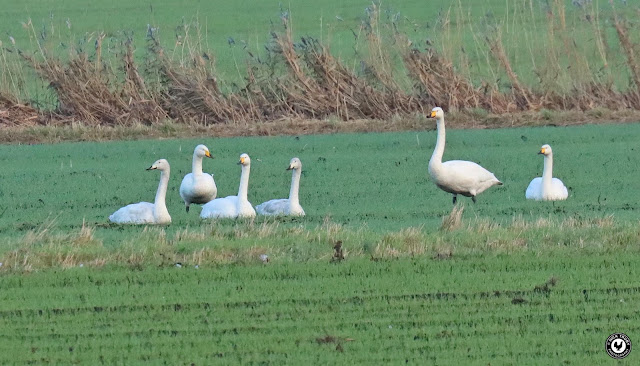 |
| Whooper Swans |
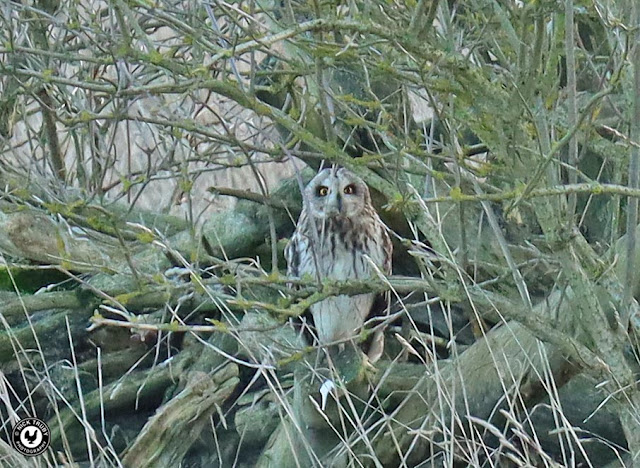
We arrived at the busy carpark at Eldernell and soon discovered that it is a very cold spot, it was pretty frigid as we kitted up for the job and made our way towards the gathered birders stood up on the exposed river wall. It was just past two o'clock in the afternoon now and the temperature was dropping rapidly. The river wall to the west overlooks an area of scrub and further on a small lake. That scrubby area is where the Owl interest lies. Closer to the carpark is some old farm buildings and more scrubby bushes, a Long-eared Owl had been discovered in one of those on New Year's Eve but there was to be no sign of any during our visit. To the other side, north, lay the Nene Washes, a vast expanse of flood land where thousands of birds feed, we could see several large flocks of Lapwings flying high above the plains. We were here to see Short-eared Owls so we made our way along the grassy wall to a viewpoint that gives an unhindered view over the scrubby field and particularly to an old log pile in the middle of it. The log pile, it has been there so long that it has sprouted saplings, is a favoured roost site for the Short-eared Owls and I quickly found two dozing the day away.

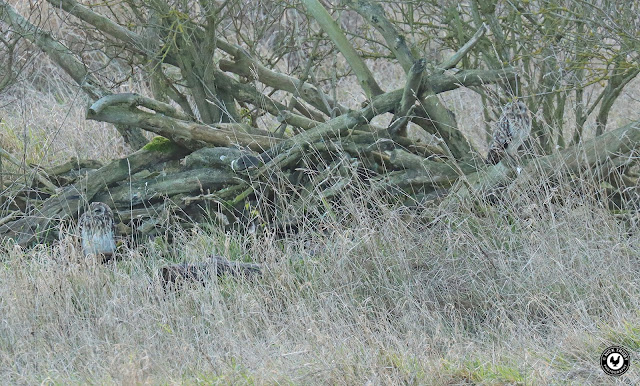 |
| Short-eared Owls |
Owls, as fantastic as they are, can be very uninteresting subjects to watch at length because when at rest they tend do very little at all. They won't move for hours barring the odd yawn or stretch so the photographer can only take the same photos that he achieved when first arriving. To be excited by Owls then they need to fly and watching Short-eared Owls fly and hunt is a fantastic spectacle to watch. The problem here at Eldernell is that, according to tweets that I'd read, the Shorties resolutely refuse to come out to play until it's almost dark by which time the light for photography has gone and it's a waste of time unless you own the very best of camera kits which unfortunately I don't. So we took a quick look around over the floods, adding birds such as Great Egret and Marsh Harrier to the burgeoning year list and decided that we'd rather get home at a decent hour instead of waiting in the shivering cold. It had been a successful day in any event and a good start to the New Year's birding. I was back to work the following day and the birding would inevitably slow up as I got busy again.
Year List additions;
57) Treecreeper, 58) Great Spotted Woodpecker, 59) Yellow-browed Warbler, 60) Long-tailed Tit, 61) Goldcrest, 62) Chaffinch, 63) Short-eared Owl, 64) Great Egret, 65) Marsh Harrier, 66) Whooper Swan, 67) Lapwing, 68) Golden Plover, 69) Wren