Saturday, 20 November 2021

Auk-ward Little Blighter, Weymouth, 19th November 2021

Little Auk, Weymouth Harbour, 19/11/2021

There are some birds that I've seen and that are on my list but are birds that I've never seen well or even managed a photo of. A few years ago, I decided that for those birds, if I could see them better than before and get a recognisable photo, then that would be almost as good as adding a new bird to my life list. A few years ago, Red-flanked Bluetail was such a bird but I upgraded my efforts on that species last year. There are others that are still on the "must see better" or the "get a photo" list, quite a few from years ago, such as Long-tailed Skua and Sabine's Gull but also a few more recent additions, like Little Bustard, Western & Semi-palmated Sandpipers, and Collared Pratincole. A fairly common bird on that list was Little Auk, a migratory seabird that is seen around North Sea coasts in the winter and particularly in November and one that I'd already seen this year off the coast of Norfolk just three weeks ago. In keeping with just about all of my previous sightings of Little Auk that bird flew past about a hundred metres out from my vantage point and was just a whirr of wings and resembled a miniature flying torpedo. I did see a Little Auk sat on the sea in Dunnet Bay a long time ago but had really hoped for another chance to get a closer view one day.

That chance came on Friday when we travelled down to Weymouth. A Little Auk had been discovered in the harbour on the Sunday before, ironically the day after we had visited the New Forest to see a Great Grey Shrike which incidentally, is a bird that is getting harder to see well in the UK so it was distant views only of that bird. 


Great Grey Shrike

So we were southbound on the A34 again after hardly not heading that way all year. We were frustrated in our efforts to find anywhere for breakfast with both of the cafes that we have enjoyed visiting in the past having seemingly become victims of the reduced trade created by the pandemic. In the event going hungry did us a huge favour because as we waited at a set of traffic lights next to the marina, we noticed a gaggle of birders all looking at something in amongst the moorings. Further luck followed as there was a small carpark right opposite the birders and within seconds I'd parked, paid the fee, geared up and crossed the road to see the Little Auk swimming merrily along the rows of idle boats. 

We took our places in amongst the throng of maybe twenty like-minded souls and leant over the railings to see the Little Auk disappear underwater. When it came back up it was a good twenty metres away and dived under again just half a second later. For the next couple of minutes it was too quick for me and I only managed to photograph water! The Dovekie, as it is known further north, was extremely active and superbly adapted to swimming under water. In fact it was "flying" down there and would travel quite a way in the thirty seconds or so that it was submerged. Eventually it bobbed up just metres away and, having realised that it was too close to its admirers, scuttled along the water for a few metres which allowed me to finally get some shots.


The
Little Auk having put more distance between it and the harbour wall was positively tearing away towards the sea, popping up like cork every half-minute or so but barely spending more than a second above water. Then it disappeared for a full five minutes before emerging into view again right by the Town swing-bridge. We all hurried after it and I saw it closer in again but my images were marred by a mooring post that just happened to get in the way! 


I
 reviewed our experience so far. We'd had excellent views of the Little Auk, a diminutive cousin of the more familiar Puffin, Guillemots and Razorbill, although this views had been hurriedly snatched in the small moments of time that the bird had been above water. The few photos that I'd taken were satisfactory but all were of the bird swimming away, although thankfully it had turned its head towards the camera for a couple of them. But all was well, we were staying with the bird in spite of the difficulty of tracking it underwater, and we had as long as we wanted to stay by the harbour to get better views and photos. Unfortunately, as is often the case, that initial flurry of activity after we left the car, proved to be as good as it got.

Now we were all assembled on the other side of the bridge and the Little Auk was seen on the far bank, diving alongside some floating pontoons there. It appeared next to one of the moored boats and had something gripped in its tiny bill. I fired off a volley of shots and then was dismayed to discover that I must have knocked the exposure setting out and the shots were largely binned. The fish the Little Auk had looked far too large for the small bird to swallow but apparently it did just that!


My last photo taken was of a pool of bubbles, I have a few of those, as the Little Auk dived again. We saw the bird again over our side of the harbour but right in against the wall and then again about fifty metres away but it was impossible to capture on the camera. And that was it. Despite searching for another two hours we never saw it after those initial views. A study of previous sightings of the bird and Tweets about it had demonstrated just how elusive it could be, someone penned it as being very Auk-ward! Indeed it was. It could somehow disappear from view for hours regardless of how many folk were looking for it. My guess is that when the Little Auk had taken its fill of food then it would nestle underneath one of the floating pontoons or alongside one of the boats, out of harms way of marauding Gulls that would probably and happily eat such a small bird, and consequently out of view of the hopeful birders.


Constant staring at rippling water and brightly coloured boats had sent my eyes funny so we retired for that longed for breakfast and coffee. I was happy to have seen the bird and could cross it off the aforementioned list although I didn't get many photos but at least my views were far better than the images that I did get. I was happy too to have my Swarovski binoculars back around my neck after being without them for nearly two months whilst they were being repaired. I'm hoping that the Little Auk stays for a lot longer so that I can maybe visit to see it again and improve on my photographic efforts. In spite of its awkwardness, it is a smashing little thing.




Thursday, 18 November 2021

OCD #4, Moor & Moor, Birds Galore! Early-Mid August 2021


Continuing on the catch-up theme, my birding during early August, generally considered the end of the summer period and frequently known as the doldrums, that time when breeding birds have stopped singing and are busy surreptitiously feeding young, birds such as Cuckoos have already moved out and the wintering species are yet to return, was spent locally on Otmoor with the odd sortie to Farmoor and Bicester Wetlands.

Saturday 31st July; Otmoor

Yes, I know, this August review starts in July. In the want for nothing to twitch anywhere close enough in the country we opted for a walk out onto Otmoor. This would turn into an unremarkable visit, when nothing really happened and most birds were stationary under a heavy grey sky, and yet the reserve was hosting the heady number of five species of wading bird! The star of these was a fine Wood Sandpiper that could be seen with patience from the first screen.

Wood Sandpiper


The water levels have been lowered in readiness for tackling intrusive reed growth into the lagoon. The exposed reed stubble and mud have attracted waders and other species, lured by the easily available feeding spots. In addition to the Wood Sandpiper, a pair of Black-tailed Godwits still sporting their summer breeding finery, six Oystercatchers including four young birds and probably raised on the reserve, and good numbers of Lapwings and Common Snipe could be watched.

Black-tailed Godwit

Lapwing

Oystercatcher


Water Rails were also showing although as per their nature they remained loyal to the reedy edge and took some finding at times. A juvenile joined an adult bird at the edge of the main arena.

Water Rail


Wednesday 4th August; Farmoor Reservoir

A Purple Sandpiper had been discovered on the concrete apron of the causeway at Farmoor Reservoir the day before. Unfortunately, as is often the case these days, news wasn't broadcast until it was too late in the day for me to go up and see it so I had to cross fingers in the hope that it stayed until the Wednesday. In the event the juvenile bird was settled and performed admirably for all comers throughout the day. It was typically confiding and afforded multiple photo opportunities. We were probably about the thirtieth and thirty-first people that it had ever seen.


juvenile Purple Sandpiper


My only previous sighting of a Purple Sandpiper in Oxfordshire was of a bird flying rapidly away across the reservoir some ten years or so ago so it was good to finally underline that county tick and gain some credence and it was species number 222 for the Old Caley year.


Also at the reservoir that day was a first-summer Kittiwake, another bird that I'd only seen poorly in Oxon before. Sadly the Gull was very poorly itself and by the time we saw it was barely alive and was hunkered up virtually moribund on the edge of the smaller basin.

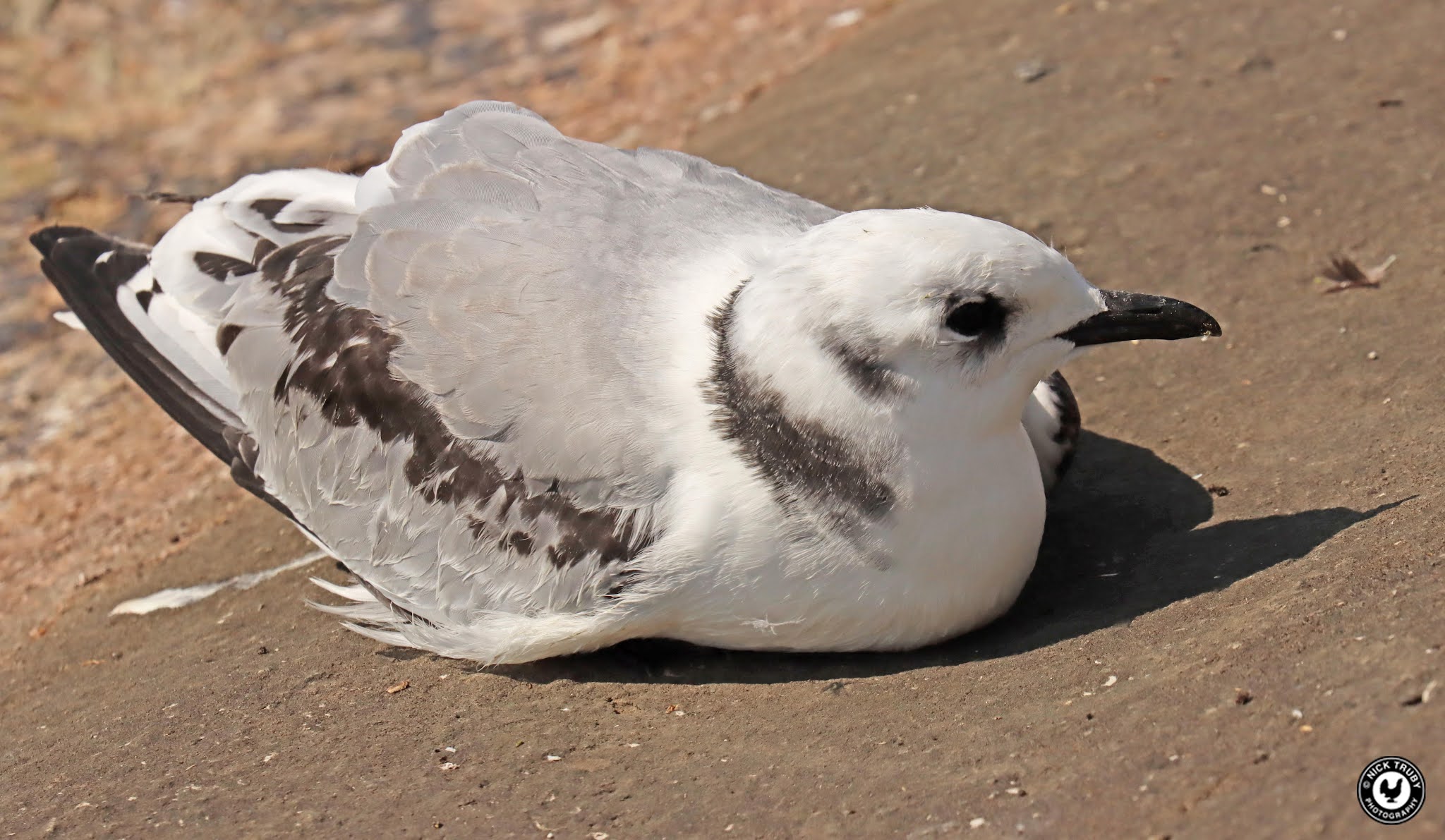
Kittiwake


Common Terns were very active around the reservoir edges and several adults were feeding youngsters that stood restlessly, and noisily demanded their parents attention, on the buoys. They will all soon be heading south on their long journeys to the Southern Hemisphere.


Common Terns


Saturday 7th August; Otmoor

A breezy day on our favourite reserve. Otmoor in the late summer is renowned amongst local birders as the time when Bitterns become more visible because they take their "feeding" flights to and from different areas on the reserve. The Bitterns were later than usual this year but we were lucky when one flew past as we sauntered along the bridleway. We'd carry that luck with us for the remainder of August as Bitterns became a regular sighting for us.


Bittern


A bigger surprise, although nowhere near as photogenic, was encountered as we sat at the "Bittern Bench" a little further along the path when I spotted a male Whinchat perched up on a tall stem next to one of the favoured areas for the Bitterns.

Whinchat


The recent colonisation of Oxfordshire by Cattle Egrets had spread to Otmoor when up to five of the birds were resting, in between their own feeding forays amongst the cattle, in front of the first screen. They were joined by a Little Egret as well as the more usual residents.

Little Egret (left), Cattle Egrets, Mallards & Lapwings


The Cattle Egrets when feeding out on Greenaways were much more difficult to see in the tall grasses. Further out on the field were the resident Common Cranes which never seem to come any closer than a quarter of a mile away and I've now admitted defeat and no longer bother taking photos of them. The only year tick of the day was a Greenshank that flew over calling, it wouldn't be long before we'd get a better chance of good views of them either on Otmoor or at our local Bicester Wetlands where they are usually reliable during August.


Saturday 14th August; Otmoor

We started this visit by taking a walk into Long Meadow, a reliable spot for Common Redstarts, and where a few had been seen over the past week or so. The Redstarts are never easy to track down in the bushes and hedges but after some searching we finally found three, a male and a couple of juvenile types. As usual, none of them were very approachable.

Common Redstart


It was another grey and drizzly day on the Moor and we huddled up against the chill wind as we made an uneventful, for once even the Bitterns were sheltering it seemed, brisk walk along the bridleway. At the first screen the Wood Sandpiper was still present and showing much more openly at the first screen viewpoint.

Wood Sandpiper


The Wood Sandpiper had been joined by a Green Sandpiper, a bird that we are far more used to seeing at Bicester Wetlands than on Otmoor. Common Snipe were also feeding in the open and a juvenile Water Rail which hadn't yet learned that it was supposed to be an elusive species, was venturing out along the edge of the stubble covered island.

Green Sandpiper

Common Snipe

juvenile Water Rail


The stars of the show on this morning, however, were the Cattle Egrets. Only four seen this time but a couple of them performed very theatrically in the stubble in front of the first screen.


Cattle Egret


One of the Cattle Egrets was even seen carrying sticks into the bush on the island and arranging it into position. As far as I know a complete nest wasn't built but it augurs well for the following breeding season.


The Cattle Egrets further impressed the attendant birders and toggers by treating us all to a couple of close flypasts on their way to and from the lagoon. We've certainly been spoiled in Oxfordshire this summer by the Cattle Egrets.


The only Bittern seen was a distant bird over the reedbed but a surprise Garganey was found at the edge of the stubble. It's been a good year for Garganey on the Moor as well.

Garganey


Sunday 15th August; Otmoor

We were back on the Moor again the following day. Halfway along the bridleway and a Bittern appeared flying strongly out towards the cross-ditch that bisects Greenaways. It's impossible to become bored with Bitterns and every sighting is greeted with the same excitement as if it was the first. They are so odd, almost prehistoric looking, but incredibly beautiful birds.

Bittern


It was how you were at the first screen with the same species as the previous day still represented. The Green and Wood Sandpipers were there but somewhat more elusive in the stubble. The number of Cattle Egrets had swollen to nine and they showed well again.


Cattle Egrets


The number of Garganey had risen to six with the family group they had presumably been hatched on the Moor all stood resting on the edge of the stubble island or swimming in the shallow water.

Garganey (back)


Garganey (centre)


The posse of Cattle Egrets, with a Little Egret cousin, all flew off together and allowed me to capture some group flight shots. 


Later we would catch up with the Cattle Egrets again when we found them nestled in with some cattle on Greenaways. I always think that Cattle Egrets look more at home and happier when feeding amongst cattle, maybe because that is what it says, "On the Cattle Egret tin". I most wanted a photo opportunity of one of the birds stood on a cows back but that will have to wait for another day.


A Hobby appeared and hunted dragonflies above our heads. Too high up for my lens but I tried anyway to capture some interesting shots.

Hobby


Probably the best moment of the month so far came when a Bittern appeared flying close to the bridleway. My camera was raised automatically at the sight of it and as it drew level I started firing off shots. The big surprise was that the Bittern decided to offload as it passed and I obtained some very arty photos of the swirling discharge!


Fully expecting a Photo of the Week accolade from Birdguides for my Banksy Bittern, I was of course thrown into more despondency when I failed to win yet again but I guess I should be grateful for the notable photo award. As somebody commented, it was a crap shot after all. I do despair though that I will never ever win a second weekly title until I can upgrade to real top notch camera equipment which seems to be a prerequisite or somehow wheedle my way into the top toggers clique which will never happen because I really can't stand that type of thing, being the anti-establishment and anti-privileges chap (loner) that I am.

Wednesday 18th August; Bicester Wetlands

A report from Alan the warden at our local reserve stating that a Greenshank was showing nicely in the pool closest to the carpark hide gave me an excuse to get up from my normal post-work sofa slumber. In glorious sunshine, which would usually be warmly received except that at BWR by late afternoon it shines directly at you if viewing from the hide, the Greenshank along with up to ten Green Sandpipers fed dutifully in the shallows just as Alan had said.


Greenshank & Green Sandpiper


A flock of twenty-four Lapwing were also present on the grassy bund but all flew along with the other waders when a Sparrowhawk scattered them. We really should visit our local spot more often but always seem to want to go to somewhere else.