Wednesday, 22 December 2021

The Old Caley Calendar. 22nd December 2021

For once my mad pre-Christmas rush to get the calendars made and ready for printing was slightly less hectic than usual. Not that I was organised for a change but just that I got my act together earlier for once. Instead of planning for the calendar throughout the year, once again I left everything until almost the last minute. I rank all of my photos from 4-5 stars after processing, the real rubbish (less than 4 star) gets binned, so I only have to trawl through the 5 star photos for the best ones but that still amounted to nearly 5000 images this year! Choosing my own favourite images from those is never an easy task either and for calendars, consideration has to be made of the aspect of the photos, portrait frames just don't work. I actually produce four different calendars to dot around the house, a best pics, a rare birds, a garden birds and a desk calendar.

Anyway here are the images that made it onto the main Old Caley 2022 calendar and a few others that should have but couldn't because they just didn't "fit" or there just aren't enough months in the year. There was only one bird that I wanted for the cover, the Black-browed Albatross was an easy pick for my bird of the year, and the half hour I spent taking frame after frame as it zoomed around, at times only feet from the end of the lens, was not just the highlight off the year but of a lifetime and will never be forgotten.

Cover

Black-browed Albatross, Bempton Cliffs, 04/09/2021


January

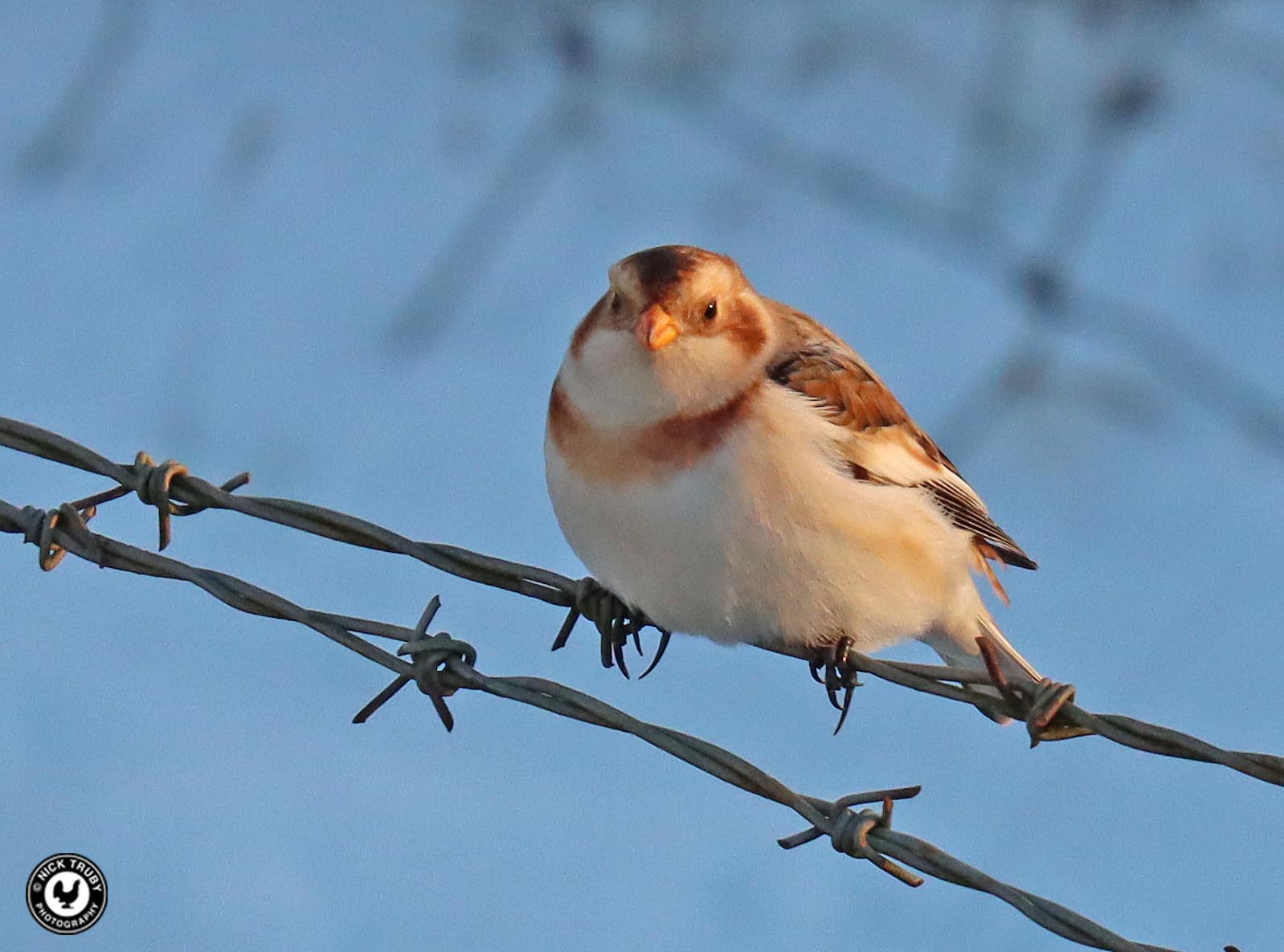
Snow Bunting, Cleeve Common, 28/11/2021


February

Common Snipe, Otmoor, 03/10/2021


March

Lapwing, Frampton Marsh, 20/08/2021


April

Cirl Bunting, Labrador Bay, 01/04/2021


May

juvenile Swallows, Marsh Gibbon, 14/07/2021


June

European Roller, Icklingham, 25/06/2021


July

Purple Heron, Summer Leys NR, 29/05/2021


August

Razorbill, Burghead, 14/09/2021


September

Dunlin, Farmoor Reservoir, 23/04/2021


October

Great Egret, Otmoor, 10/10/2021


November

Two-barred Greenish Warbler, Spurn, 20/10/2021


December

Red Kite, Linkey Down, 27/03/2021


Best of the rest

Northern Mockingbird, Exmouth, 01/04/2021

Bittern, Otmoor, 15/08/2021

Black-browed Albatross, Bempton Cliffs, 04/09/2021

juvenile Chough, South Stack, 18/06/2021

Guillemot, Burghead, 14/09/2021

Dartford Warbler, Greenham Common, 22/03/2021

Elegant Tern, Cemlyn Lagoon, 17/07/2021

Gannet (3cy), Bempton Cliffs, 16/07/2021

Grasshopper Warbler, Boddington Reservoir, 30/04/2021

Great Egret, Otmoor, 10/10/2021

Hoopoe, Warwick, 26/10/2021

Little Auk, Pinkhill Lock, 30/11/2021

Little Owl, Mixbury, 26/08/2021

Redwing. Oxford University Parks, 13/02/2021

European Roller, Icklingham, 25/06/2021

Sanderling, Farmoor Reservoir, 08/05/2021

Snow Bunting, Carsington Water, 09/10/2021

Stonechat, South Stack, 18/06/2021

juvenile Swallow, Marsh Gibbon, 14/07/2021

Common Swift, Farmoor Reservoir, 09/05/2021

Tree Pipit, Forest of Dean, 14/04/2021

Turnstone, Farmoor Reservoir, 08/05/2021

Turtle Dove, Snettisham, 24/07/2021

Two-barred Greenish Warbler, Spurn, 20/10/2021

Wheatear, Spey Bay, 17/09/2021

Whinchat, Worlds End, 17/06/2021

Whiskered Tern, Longham Lakes, 14/05/2021

Wood Warbler, Wyre Forest, 23/05/2021


Yellow-browed Warbler, Aylesbury, 03/01/2021

Cattle & Little Egrets, Otmoor, 15/08/2021


Saturday, 4 December 2021

A Tale of the Most Unexpected! Pinkhill Lock, Farmoor, 30th November 2021


Ten days before Mrs Caley and I travelled to Weymouth to see a Little Auk that had been found the week before swimming in the harbour there (read about that here). Little Auk's are our smallest Auk species and are usually encountered as rapidly flying dots as they pass North Sea coasts in the late autumn and early winter. Although Little Auk was on our life lists we had never had a great view of one and certainly had never obtained a photograph so we made the trip to Dorset to put that right. In the event, we did get to see the bird well but it didn't prove to be as photogenic for me as it had for others so despite effectively underlining a lifer with good views I was still a bit disappointed that I didn't get a decent photo.

On Tuesday I had finished work by early afternoon and was backing onto my driveway when the "clip-clop" alert tone of my phone informing me of a WhatsApp message from one of our local groups had arrived. I have different tones for different groups so that I know where the messages are from but instead of reading the alert immediately I unloaded my van first. When another alert sounded quite soon after the first and then another, I knew that something good must have been found. A further alert informing me of an incoming message from Mrs Caley, who had also received the same messages from the WhatsApp group, finally had me reaching for the phone. She couldn't believe why I hadn't called her to say get ready, we're going out!

The messages both from the local birding group and from Mrs Caley, pretty much had me aghast. There was a Little Auk on the Thames at Farmoor! In all my birding life I had never even had a sniff of a chance of seeing a Little Auk in Oxfordshire so this was exciting and really demanded immediate action. However, my excitement lacked enthusiasm because through the day I had slowly felt quite ill owing to a reaction to the Booster jab that I'd been given the afternoon before. I was looking forward to falling asleep on the sofa rather than go out birding! Some things just have to be done though and time was pressing so at two-thirty we were heading out into the traffic and southwards towards Oxford. Constant updates from fellow Oxon birders informed us that the Little Auk was still on the river close to Pinkhill Lock.

Less than half an hour later we parked up in Farmoor village and headed out towards the Lock via a footpath. Thankfully it's only a half mile or thereabouts from where we parked and despite each step getting heavier than one before and me tiring with each of those steps we made it to the assembled fellow county birders soon after. I momentarily forgot my headache and general allover malaise as I quickly located the stranded seabird which was swimming, very strongly to its credit, in mid-river by the moored narrow boats. This was an amazing county tick and one I never envisaged getting. My own personal list had moved up to 235, still 40 shy of the top county listers but then I missed out on the boom years of the 80's and 90's because I was getting drunk at football matches, although I felt as if I'd recaptured one of the subsequent hangovers. Also amazing was the fact that I'd been given a second chance at such a tough bird to see after the trip to Weymouth a week and a half before.

The Little Auk, clearly a victim of the recent Storm Arwen which had battered the UK on the weekend before, swam strongly towards the lock and disappeared around the bend in the river before I had a chance to actually catch up alongside it. I walked briskly after it, leaving Mrs Caley to exchange pleasantries with some of our Oxon peers while they had to make do with a quick hello from me because I wanted some photos. I caught up with the Little Auk at the mooring pontoons and took some rapid-fire shots, unfortunately all with the wrong camera settings since they were still set for shooting Snow Buntings in the brightly lit snowy conditions on Sunday! I eventually realised that mistake and reset in time to get some useable images just as the bird sailed past at just a few metres out from the bank.


The Little Auk was swimming aimlessly around the lock area, often going right up to the lock gates before frustratedly turning back and swimming back again. It put me in mind of the way a small scamp of a dog would swim, low in the water and fast like a whirring clockwork toy. By the time it had swum right up to me once more, I was feeling really sorry for the poor little waif and even a bit guilty that I was taking pleasure from the predicament it had found itself in. 


At one point the Little Auk had swum right underneath the pontoon that I was knelt on and I could see it just a couple of feet beneath my feet. It really did appear totally confused and my heart was aching to see it behaving so hopelessly. The bird we had seen in Weymouth by contrast appeared totally at home and at ease in the harbour there, and indeed gave us the right runaround as it frequently dived underwater. This Little Auk never submerged once. We watched it try its luck at the lock again and of course it was thwarted by the closed gates once more. It attempted to climb up on the reeds at the far side of the channel and stood precariously on a clump of stems for a minute or so. It had picked up some detritus from the mucky water which had stained its pristine white underparts brown and made it look even more pathetic. This was rapidly turning into the saddest twitch ever.


The Little Auk flopped back into the water again and yet again swam aimlessly but quickly upriver. As it passed the moored boats on the opposite bank we decided that we'd seen enough. We turned away and prayed that the bird would somehow survive but had grave doubts that it would. It seems daft to get so emotional about a single bird, especially considering that Little Auks are amongst the most abundant seabirds on the planet but I love all things feathered and I just felt so sad for it. 


As we walked away, we had only been present at the riverside for only twenty minutes, we chatted to Badger about the possibility of whether the bird could be rescued. The next day thanks to the power of the local WhatsApp group and the dedication of several fantastic people the Little Auk, which thankfully had survived the night, was captured. It was given a check up and it seemed to be in reasonable health so a decision was made to give it a fighting chance of survival by transporting it to the Somerset coast and releasing it into a tidal tributary of the Severn Estuary. Apparently on release it swam strongly out into the channel so we can all hope that it did make it back out to sea where it could feed and be at home again. My thanks go to all those involved in giving it that chance at survival.


Wednesday, 1 December 2021

Snow Dumpling, Cleeve Common, 28th November 2021


After being kept at home by the wild weather on Saturday which resulted in my having to do some essential temporary repairs to our garden fence to prevent it from being repositioned somewhere in the North Sea we were determined to go out on Sunday and see something. We arranged to meet our good friend Mark (aka The Early Birder) at Cleeve Common in the morning where a Snow Bunting had been thrilling birders, toggers and the interested passing public alike, who doesn't love a Snow Bunting? Another good friend of ours, Kyle (aka Birdwatch Britannia), had seen the bird on Saturday afternoon and had secured some nice photos of the bird feeding on snow covered grass. At the time I had rued missing out on the opportunity to go there on Saturday because I thought that the snow would have melted by Sunday. I needn't have worried though since we even had some snowfall in Bicester on Saturday evening so there was sure to be some left in the Cotswolds particularly in view of overnight temperatures as low as minus five degrees celsius.

We were on the road early because we aimed to arrive for the sunrise at quarter to eight. We'd never visited Cleeve Common before despite it being only an hours drive from home and well known as a decent birding spot especially during spring and autumn migration times. It also attracts quite a few scarce and rare birds that we could have gone to see in the past and will certainly consider doing so in the future. The drive was fine on the clear roads at the early hour although the temperature was reading a chilly minus three still. The long haul up the hill to the Common was a lot icier and extra care was necessary. There were Thrushes in huge numbers and of various types flying out of the bushes and trees that lined the minor road. They were mostly Redwing but Fieldfare, Blackbirds and Song Thrushes were all seen as well in addition to several flocks of unidentifiable Finches. At the end of the road we spotted Mark's van as expected and more surprisingly a few other cars already parked up. I had known that we wouldn't beat The Early Birder to it, he didn't choose that moniker for nothing, but I also knew that we didn't need to because it was still fairly gloomy although we could see the sun just emerging to the East behind the hill.

Booting up in the carpark was tricky because of thick ice that coated the tarmac. Our first view of the common was one of a sea of white, it had readily snowed here the day before and there was a more than passing resemblance to a snow coated plateau in the Cairngorms where several pairs of Snow Buntings breed and where a few hardier individuals remain all winter long. We could see Mark prowling around what is known as the Dew Pond about a couple of hundred metres from the cars. We joined him at the fenced off pond and exchanged pleasantries. It was shivering cold and an icy wind numbed the extremities and I was glad that I'd worn full thermal kit for the first time this winter. Cleeve Common is almost a thousand feet above sea level and is the highest point in The Cotswolds so is very exposed and on a morning such as this, was frankly, quite b****y arctic!

Mark said that he hadn't seen the bird despite walking around the pond twice already. As he was saying that a shifting shape low to my right caught my eye, so I casually said to him, "What's that there then?", knowing already that it was the Snow Bunting. On the ground, in the weak morning light, it was surprising how well the Bunting blended in and it took a few seconds before both Mrs Caley and Mark saw it. It was probably only around a dozen feet away too!


The Snow Bunting, fluffed up against the cold but obviously much more suited to the conditions than we'd ever be considering that it is a bird of the Arctic and other cold climates, was pecking away at the snow and ice covered short grass of the hill. An untethered dog ran past and it flew up and perched on the barbed wire fence that surrounded the pond where it posed beautifully, illuminated by the rising sun.


Snow Buntings are well known for being fearless birds and this one was no exception and appeared totally relaxed even though we were stood just metres away. Mark is a very competent photographer and at this early hour, realising that the lighting coming hard from one side was problematic for good photography, didn't bother even raising the camera whereas I was already shooting frame after frame because I don't really care for optimal conditions and take shots whenever I feel like it. It's not like I'm trying to win any competitions! I tried to get around to the "right side" of the bird so that the sunlight hit the subject nicely. Typically though just as I got a decent front on view, the bird turned around and gave me the rear view instead. Still I love them all regardless.


The sun having now appeared in its entirety above the brow of the hill embellished the frozen water of the pond and turned it into a brilliant blue colour which provided a radiant backdrop to the next set of photos. The Snow Dumpling, as I had re-christened it because of its plump shape as it balanced on the wires, stretched, preened and readied itself for the days foraging ahead.


Because of the low sun, the lighting was changing rapidly and the three of us danced around the outside of the pond in order to get what we thought was the best viewpoint at the time in order to get shadow free views. The snow covered steep banks of the pond interspersed with long grassy stalks offered more vibrant backgrounds to the photos.


Having completed its morning ablutions, albeit without a dip in the pond, denied to it because it was frozen solid of course, the Snow Bunting looked prepared for a bout of feeding. Firstly though it hopped  onto a post, took a good look around, and then hopped back onto the fence nearby where it nibbled away at the tallest grass stems. From there it dropped onto the ground and began feeding in earnest.


On the ground the Snow Bunting could be hard to discern particularly when it fed inconspicuously next to the fence. Fortunately it chose to peck away at the grass covered by a nice clump of snow which presented another scene for the next of photos. This bird was giving us the full gamut of poses and settings for us, Mark had finally decided that the time was ready for photos so had joined in the fun.


The Bunting moved out into the shadows to the west of the fence and at times could be really difficult to see by the uninitiated as proven by two birder-toggers walking almost straight over it! The bird merely shifted slightly back to the fence to avoid there feet. Usually I'd been annoyed because any other bird would have flushed at such a close approach but we'd already had a good fill of this bird and it wasn't bothered by them anyway. When they asked, "Where is it?", we pointed to where they had just come from. They still couldn't see it until it fluttered back out onto the trodden ground again.


Another few birders and toggers arrived and just as at a gig when for some reason people need to talk over the music, the conversation and the disturbance increased, not to the bird which remained oblivious to the folk poring over it, but to us who for forty-five minutes had enjoyed the serenity of the scene. We could see more folk arriving to enjoy the bird and I was grateful that we'd got there so much earlier and had the bird to ourselves. I took a few more photos of the Snow Dumpling and we left, leaving Mark behind to get that crippling shot that he so craves and deserves for his patience, see his blog at The Early Birder for the excellent results.


I've seen lots of Snow Buntings over the years, in the Scottish Mountains and around the coasts so to see one inland and not far from home was a bonus. It was also one of the best "performers" that I've ever encountered.