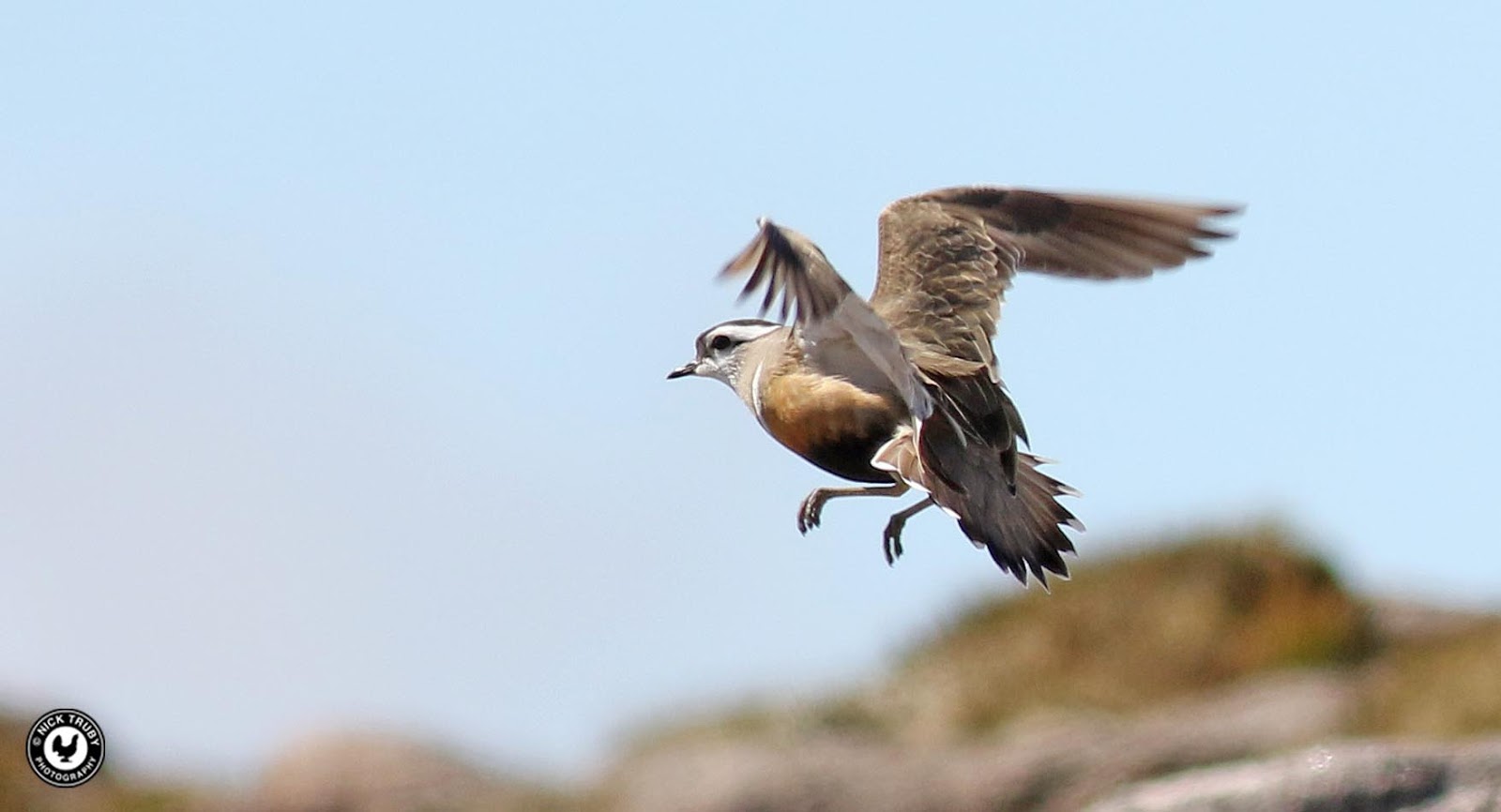
I've always loved Booby's! Who couldn't be buoyed by such a jocular name for a bird. Whether its true or not, I don't know, but I've heard before that Booby's were named because of their odd appearance and also their awkward manner when encountered on land owing to the ridiculous looking big feet (in various colours) that the Booby (or Sulidae) family possess and which have to be lifted in clown like fashion in order to walk. Boobys are seabirds that live in the tropical waters of the planet and primarily around islands in the Caribbean. Mrs Caley and I have never travelled to anywhere where Boobys live so my only previous knowledge of them is when they've featured on a wildlife documentary but even then, because of that name, the bird has lodged in my memory.
Just over a week ago a photo had emerged on Twitter that showed a possible Brown Booby flying off the shore in Kent. Then a few days later a holidaying birdwatcher had spotted another fishing in St Ives Bay in Cornwall. Presumably these birds had been victims of Hurricane Dorian which was wreaking havoc in the Caribbean region and had been blown away from their normal ranges. The Cornish bird was seen again and sparked a mass twitch since a Brown Boobys had never been seen in the UK before. I watched with interest the events in Cornwall which indicated that the bird was extremely tricky to connect with since it was usually only present early in the day and soon left the area once the beaches became busy. Hundreds of hardened twitchers made the journey to see the bird only to be disappointed and I read of many that made repeated trips before they got lucky. A good friend of mine went on Sunday and spent a frustrating day there and failed to see the bird. He then made a very wise decision to stay overnight and try again on Monday. The St Ives Bay bird wasn't seen then either but incredibly another different Brown Booby was sighted at Kynance Cove on The Lizard! The twitchers assembled on the north Cornish Coast then hot tailed it to the opposite coast and connected with what was a much easier bird to see (read Ewan's fantastic account here Black Audi Birding).
All evening on Monday and then all day on Tuesday I watched with gnashed teeth as tweet after tweet with accompanying photos surfaced of the Brown Booby at Kynance Cove. The bird was remaining faithful to a couple of small bays in which it fished and when not fishing could be seen at most other times stood on a small rocky islet about 400 metres offshore. I've never travelled nearly 300 miles (and back) to see a bird before and have always been reluctant to undertake such journeys. As a consequence my own life list has never grown that quickly. But this Booby had piqued my interest and I was eager to go. Further complications presented themselves with Mrs Caley being struck down with a bug and my father still being laid up in hospital. I began dropping hints to my wife, such as texting "Booby is still there", "the sea air is good for a cold" and "I can get the day off tomorrow", after all I am such a heart. I went into the JR to see Dad on Tuesday evening and as I parked up I received news of a Manx Shearwater that had been found at Farmoor. Luckily I already had a Manxie on both this years list and my county list so didn't have to forsake my Dad this time. Instead I allowed the news of that local seabird to really gee me up for that drive to Cornwall! I got home to find Mrs Caley really struggling and being very ill. Obviously my plans would have to be put on hold and we'd maybe get a chance to go at the weekend if the bird remained.
I went out early on a work errand on Wednesday morning and now expected to be confined to an "office day". Imagine my surprise then when I found Mrs Caley all togged up and ready to roll! A bit later than I would have liked but at 08:30 we hit the road for the 276.4 mile trip to Kynance Cove! The delay actually helped since we missed the rush hour traffic and breezed our way southwards towards Cornwall. The journey would take around 5 hours but we decided to get most of the way there before stopping for lunch. As it was we pulled into a pub carpark near Helston at 12:30 fully intending to have some food and drink. We were shown to a table, didn't like the menu (wanted a snack not a full meal, seems to be a growing problem with pub fare these days), realised that they were busy anyway and didn't want waste time so got up and left and grabbed a sandwich from a supermarket instead and ate that while driving through the Lizard peninsular. Now we were proper twitchers who of course would never contemplate interrupting a journey on the way to see a bird. We pulled into Kynance Cove National Trust car park and were instantly relieved of a fiver by the thieving (in my eyes) NT, maybe they should consider a rebrand to the National Car Parking Rip Off Trust. Despite being ruffled by the local version of the Highwaymen I was playing it cool since the Booby had been called continually during our trip down so there would appear to be be no rush since it wasn't going anywhere.
We spied the other birders assembled on the cliff top and ambled over, no running but just ambling. They were all looking out into a small bay to the south of the car park, I scanned around but couldn't see anything so I asked the guy nearest to me where was it? He gave me a line and after a frustrating whole ten seconds or so I finally located the Brown Booby at about 400 metres distance. It took a few more seconds to get Mrs Caley on to the bird and relief was followed by sheer excitement and exhilaration that such a spur of the moment decision to take the long twitch had paid off.
 |
| Brown Booby, Kynance Cove, Cornwall, 04/09/2019 |
It was very windy stood on the exposed cliff so we sought a spot that would be a bit more sheltered and settled in. The Booby continued fishing over the bay below us but was generally quite distant. Even though I knew that it was too far out for the reach of my lens I kept firing off shot after shot especially when it stooped into a dive. Once or twice it flew in a bit closer which enabled me to get slightly better record shots.


Then the Booby did fly in nearer, in fact it flew to right under the cliff where we were sat. I put the camera into overdrive shooting at bursts of several frames per second which is ok if the lens is focussed correctly which, of course, even at the closer range it wasn't. I then had a momentary panic when through the viewfinder the message "card FULL" popped up! I knew that I had only had a couple of hundred of shots left when I started out but hadn't expected to use them up so quickly. Luckily I carry a spare but had to fish it out of my pocket, extract it from that bloody difficult to get into plastic case that memory cards come in, swap it for the full one and start shooting again! It was akin to a scene from the latest John Wick movie with memory cards substituting pistol cartridges. Through it all the chap sat to my right was saying stuff like "it's right in front of us" and "wow (what a time to be fiddling around with your camera!)". New card installed, I found the Booby again and continued taking photos. The bird was now at much closer quarters than record shot territory but we were still several hundred feet above at the top of the cliff. If only we'd been sat on the beach below!


The Brown Booby stayed underneath our position, sometimes diving for fish and then sitting on the water before taking off again and repeating the hunting technique. I even stopped taking photos for a few seconds and watched it! At one point it must have caught a fish only for it to wriggle free. The Booby then dived laterally into a shallow wave to re-catch its meal.


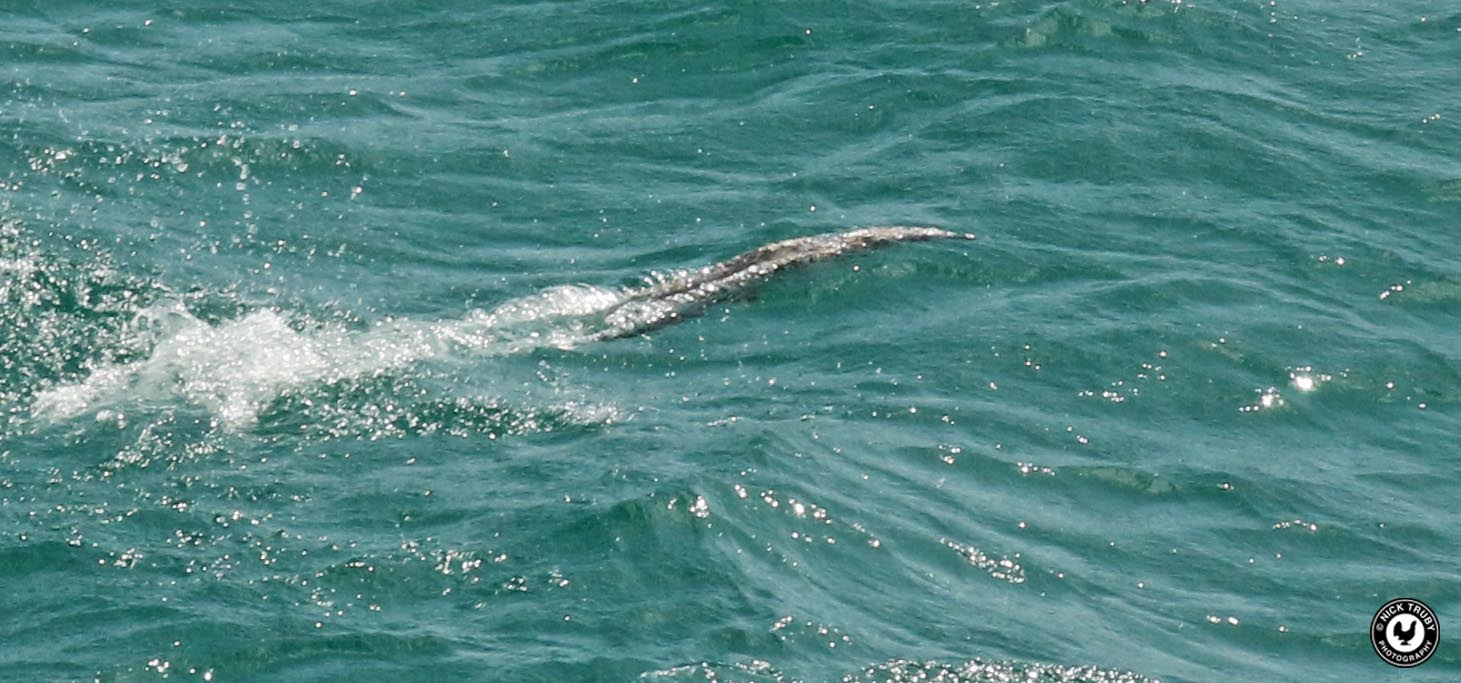


After a frantic five minutes or so of the full on action the Booby must have been sated since it took off from the water for one last time and flew strongly to the west around the small headland and out of view. I stood up and watched the bird head towards its favoured staging post of "Gull Island" but it flew straight past it. That was the last I saw of it and it wasn't seen again that day although it has returned since. We had arrived at 13:30, first saw the bird at 13:45 and it had flown off at 14:07. Thank goodness we didn't linger in that pub and eaten lunch! If we had we would have missed the bird and the whole trip would have been for nothing. Successful twitching draws a very fine line!


When it became obvious that the Brown Booby wasn't likely to return we made to head for the car since there was another bird in Cornwall that I wanted to see on the way home. I felt really sorry for a couple of birders who had just arrived and contemplated that it could have been us. Mrs Caley spotted a couple of Choughs flying high above the cliffs, bird #261 on the Old Caley year list! the Choughs landed on the cliff slope ahead of us so we gingerly picked our way around to them. To our surprise there were 7 altogether feeding on the short turf and also taking time out to preen.


 |
| Chough |
At the car park a very approachable Rock Pipit was working its way along a grass covered wall and proved to be very photogenic.


 |
| Rock Pipit |
We considered our options for the rest of the day while enjoying a Cornish Cream Tea (with coffee) in the Lizard village. It was already past 3 o'clock and we still had that 5 hour return trip ahead of us so we dismissed reports of a Red-backed Shrike and Wryneck locally since we'd already had fine views of both species this year (see previous posts Shrikes and Wryneck) and kept to my original plan of twitching a Buff-breasted Sandpiper that had been showing really well at Davidstow Airfield in the north of the county and not far off our route home. We had failed on a mission to see a Buff-breasted Sand at the airfield a few years ago but had subsequently seen a couple elsewhere and indeed had seen one at Frampton Marsh just a few weeks back but had never had a close view of one. The drive of around 60 miles to the airfield was a little arduous with the traffic through Truro being quite heavy and we didn't make it to the windswept spot high on the North Cornish moors until almost 5 o'clock. At least the micro-light aeroplanes wouldn't be flying that late so I made my way onto one of the supply roads to the main runway and headed towards another car that was already there.
The Buff-breasted Sandpiper had been reported as keeping company with a small group of Ringed Plovers and they were supposedly feeding at the edge of the main runway close to the old ruined control tower. In recent times the airfield authorities have decided to limit access to the main runways because of disturbance to the flying enthusiasts that use them. I must admit that considering the poor state of the runways that make them very difficult to drive on, I certainly wouldn't want to be landing a micro-light aeroplane on them! Yet pilots do apparently. In the event it didn't matter because I spotted the group of small wading birds right by the side of the "used to be tarmac but is now mostly potholes and gravel" supply road well before the main runway. It took me just a few moments to see the Buff-breasted Sandpiper in amongst the group of six Ringed Plovers. Keeping a respectful distance I pulled the car up alongside the birds wound the window down and took some shots. This was the first time I'd been close to a Buff-breasted Sandpiper and the first time I'd been able to get close up photos. I turned the car around and let Mrs Caley have the ringside seat for another few minutes then returned to the main road and headed for home.


The drive home was uneventful except for a major snarl up at Bristol caused by the closure of the M4 but that didn't impact on us too much since I always use the M5 and A40 anyway. We made it back just before 10 pm and began planning our next twitch for the weekend. Neither of us will forget the day that we just upped and drove to Cornwall and back to see a Booby bird!
The Buff-breasted Sandpiper had been reported as keeping company with a small group of Ringed Plovers and they were supposedly feeding at the edge of the main runway close to the old ruined control tower. In recent times the airfield authorities have decided to limit access to the main runways because of disturbance to the flying enthusiasts that use them. I must admit that considering the poor state of the runways that make them very difficult to drive on, I certainly wouldn't want to be landing a micro-light aeroplane on them! Yet pilots do apparently. In the event it didn't matter because I spotted the group of small wading birds right by the side of the "used to be tarmac but is now mostly potholes and gravel" supply road well before the main runway. It took me just a few moments to see the Buff-breasted Sandpiper in amongst the group of six Ringed Plovers. Keeping a respectful distance I pulled the car up alongside the birds wound the window down and took some shots. This was the first time I'd been close to a Buff-breasted Sandpiper and the first time I'd been able to get close up photos. I turned the car around and let Mrs Caley have the ringside seat for another few minutes then returned to the main road and headed for home.


 |
| adult Buff-breasted Sandpiper |