Our intention today was just to stop off at Loch Leven for a coffee and cake to break up the long journey northwards and then, if it was still around, to drop in and twitch a glaucous gull which we'd never seen before. But the dawn was glorious! Sunlight streamed in through the hotel window and the light was amazing. We couldn't waste it so over breakfast I quickly pored through the "Best Birdwatching Sites in Northumberland" and hatched a plan to visit the Lighthouse (or Stag) rocks at nearby Bamburgh where a flock of a 100 or more purple sandpipers was reputed to spend the winter. Purple sandpipers are one of my favourite wading birds since they pugnaciously dodge incoming waves that crash onto the rocks as they feed. They are also very well camouflaged and blend in perfectly with the hues of the rocks. Plus there would be other good coastal birds around which we very rarely encounter at home. Bamburgh is well known for it's huge and impressive castle which dominates the skyline for miles but being the philistine that I am I totally ignored that and headed north along the coast towards one of the most insignificant lighthouses that you could imagine. Even my mate Captain Trev didn't recognise it and he works for Trinity House! I parked the car and jumped out into a bitterly cold wind that blew in from the sea but it was still brilliant sunshine!

A rook landed on a rail fence right next to me. I hadn't even got the camera to hand yet! As quick as I could I picked up the Canon aimed and fired a shot at the bird and almost but not quite managed to get a pretty smart image of the rook as it took took to the air.

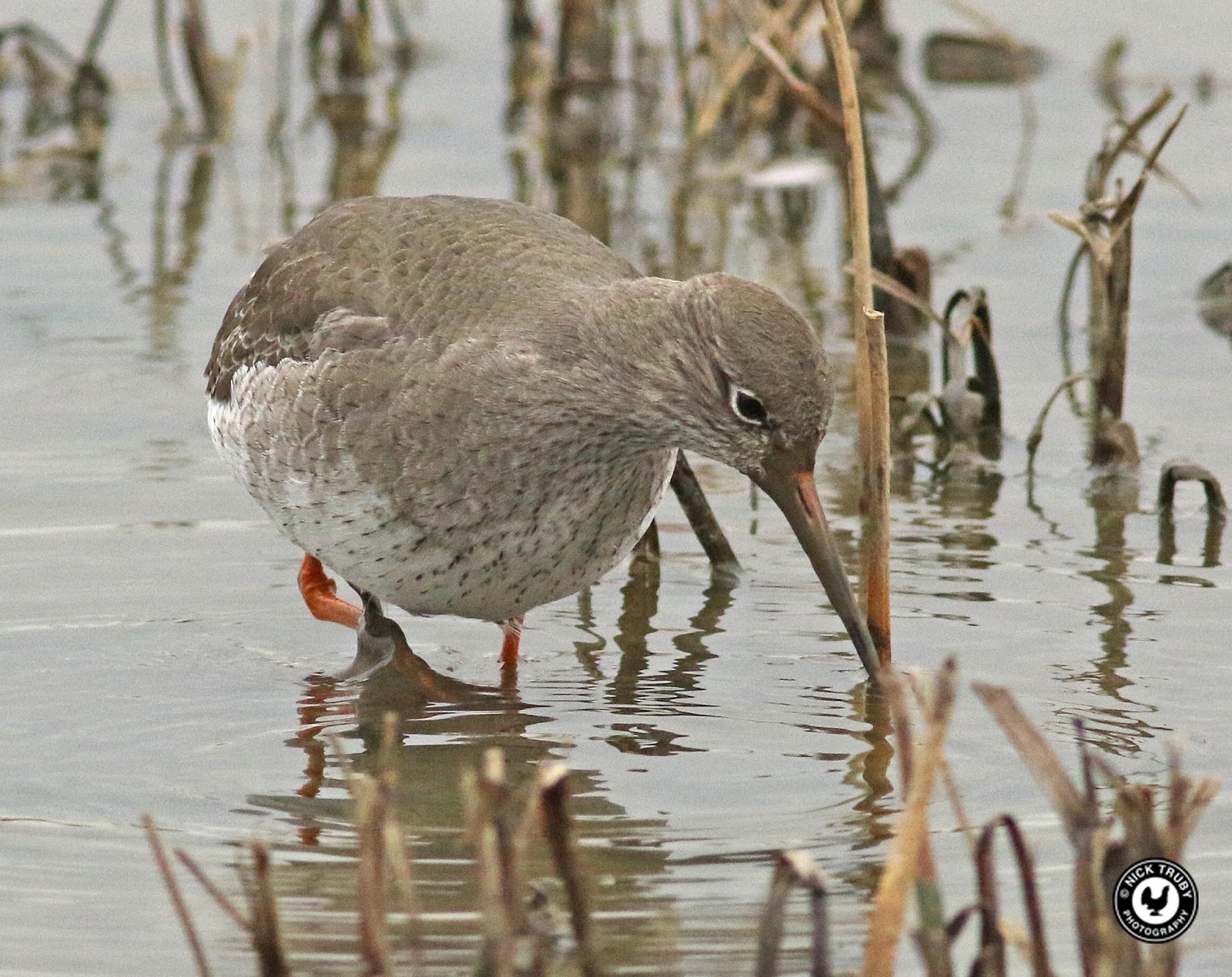
I scanned the beach and the rocks (known as Stag Rocks because of a white stag that has been painted on the side of a rock face) for the purple sandpipers but could only see a couple of redshank.

A few eider ducks loitered offshore and various gulls passed by (but no white-wingers). Mrs Caley and I strolled along the clifftop towards some very nicely located desirable residence's and the local golf club. The first tee was in full swing (ha!) and, even though a former golfer myself, I couldn't help thinking that if we were mad to be out birding in a -5 wind chill then those chaps are clearly demented! A group of 10 or so oystercatchers were sleeping out at the edge of the rocks but I couldn't see anything else so we continued along the coast.

I decided to check the black and white sentinels out a bit more closely and only then noticed a couple of smaller birds scurrying around the pools and rocks. Closer inspection revealed that they were indeed purple sandpipers. We edged down the cliff to get closer and then out on to the rocks to get a bit closer still. There was a convenient old slipway close by and we used that to approach to about 50 yards. Then the heads all came up. Close enough! The birds settled down again and I took a few frames but the viewing position wasn't the best.

A curlew took flight from an unseen position and sailed past at speed closely followed by a second.

As I was gazing out to sea and watching a small flock of about 20 common scoter fly past when a huge flurry of smaller birds whirred past and headed to the rocks a bit further up the coast. After wheeling around a few times they settled right out at the edge of the water and mostly went to sleep. This was the purple sandpiper flock that I'd hoped to see and counting from the photos taken numbered over 140 birds! Easily the most that I've seen in one place.


We stealthily sauntered (is that possible?) up to the area where they had put down and leaving Mrs Caley comfy atop a flat rock I then quartered very warily over the rocks towards the birds. The rocks here were cratered with small pools and I had to tread very carefully in order to preserve dry footwear. I managed to get within 20 yards or so of the sandpipers before the rocks became treacherously slimy with seaweed so sat down and observed the sleepy flock. Most were either resting or preening but a few were feeding and it was on those that I dedicated my efforts to capturing on "film". A single turnstone was also present but for some reason I couldn't get a shot of it.


We motored past Edinburgh and took the new Firth of Forth crossing over into Angus and on to the RSPB reserve at Loch Leven. This is always a convenient stopover when travelling north and has an excellent cafe that overlooks the Loch and a feeding station in the visitor centre grounds. Normally we'd be visiting in June and see swallows and warblers but here in February the feeders were proving to be vital to many hungry bird species including a surprising treecreeper that was taking seed from one of the birdtables! The main attraction though was the resident flock of tree sparrows which are an increasingly difficult bird to find in Oxfordshire. After refuelling on soup and coffee I spent a few minutes taking some images of these delightful little sparrows.


We drove on northwards and arrived at Pitlochry just before 15:00 and only an hour or so before the light would wane. The glaucous gull had been seen sporadically adorning the "sludge" barrier just upstream of Pitlochry dam. According to Birdguides its appearances were irregular and didn't conform to any pattern so we'd have to take our chances. We walked towards the dam wall and amongst a dozen herring and lesser black-backed gulls stood the unmistakeable figure of the hulking great juvenile glaucous gull. Our luck was in! The glaucous gull was stood exactly where it was always seen, the barrier being about 50 metres away. The light was still fairly good too so our views were pretty good. We traversed to dam walkway to get closer views and to position the sunlight at our backs. This was a very cold spot and the wind out in the middle was icy indeed. The best views were from near the western bank but almost as soon as we'd got there the glaucous gull, without warning, suddenly took flight and sailed away south and was lost to view. Luckily I'd managed to grab a few flight shots as it passed.


Our journeys north are often embellished by some superb birds and birding and today was certainly a good one! Looking forward to finding some of the Scottish specialities up in the Highlands.