Monday, 13 November 2017

Haw's and Water! 11th November 2017

And nowhere near the lake district but Buckinghamshire.


There is a local BBOWT reserve that provides a winter refuge for bitterns. Usually later in the year but one has already been seen and photographed there during the past month. We tried in vain for a view a fortnight ago so went for another go. Also a couple of bearded tits had been reported at the same site so we were hopeful of finding and seeing both.

On a Tripadvisor rating the hide would score less than 1 star for its appointment value; no door, freezing cold, very basic, stale ambience etc. But for location it gets a 5 star; superb views of a lake and more importantly a reedbed. Maybe time for BBOWT to upgrade the facilities? Although I do realise that previous hides have been vandalised so perhaps they'd be no point. The reedbed is where up to 3 bitterns have been seen in the past. Mrs Caley and I have had great views of these skulking waterbirds over the last two winters here as the photos below illustrate.


bittern


We had the hide to ourselves so we settled in and opened the hatches. The lake was fairly calm with just a slight ripple. There were a multitude of gulls bathing and preening, mainly herring and black-headed but a few lesser black-backed gulls too. The usual waterbirds were around; tufted ducks and mallards, coots and moorhens, little and great crested grebes. On our previous visit a red-necked grebe had been seen just a day after so I made a careful scan of the whole lake but other than a female goldeneye could find nothing else of note. 
goldeneye (female)

little grebe


There are 3 channels cut into the reedbed, I imaginatively call them the left-hand, middle and right-hand channels. The bitterns are normally encountered wading across these channels, particularly the left and right. Ten minutes into our vigil I noticed a small bird flitting amongst the lower stems on the right hand side of the middle channel. Could it be one of the bearded tits? Unfortunately not but it did turn out to be a fine cetti's warbler although it disappeared as quickly as I could get the camera on it! We kept surveying the various channels and were rewarded, not with a bittern, but with a water rail scurrying rapidly across the right-hand channel. Now in my experience here, if a water rail runs across one of the side channels it will then move slowly through the adjacent patch of reeds and then emerge at the edge of the main channel and then fly across that to the next reed stand. It flies rather than walks because the middle channel is much wider and the bird doesn't want to be out in the open for long. It will then move through the next patch of reeds before either running or swimming across the other side channel.  This water rail did exactly that, except when it emerged at the edge of the reeds and flew across the main channel I wasn't ready with the camera and all I managed was a few out of focus shots. 

water rails, they move so fast!


I was ready however when it swam across the left hand channel!


water rail
When the quarry is an elusive bird like a bittern, you really need to keep a constant eye on the channels. Look away and you could miss one! However I did find time to gaze amongst the various gulls and sadly there was a very sickly looking lesser black-backed gull on one of the wader rafts. Not long for this world unfortunately. It was being watched attentively by many of the herring gulls no doubt sizing up a future meal opportunity. Nature can be brutal. There were some healthy looking lesser black-backed too though.
sick lesser black-backed gull


healthy lesser black-backed gull


After almost 2 hours and no bittern sightings another water rail made the right to left journey across the reeds. This time I was quick enough to capture it in flight but the camera focusing wasn't! C'est la vie! Interestingly though, as the blurry photo below proves, this water rail had caught a small fish. 


water rail with fish supper
It took a bit longer than before, probably because the fish had to be consumed, before the water rail emerged at the edge of the left-hand channel and swam across to join the other. I reeled off a few more frames of course.


Apart from seeing a sparrowhawk getting mobbed and then ousted from some bushes on the other side of the lake by a magpie and a crow not much else happened. A grey heron reclaimed the bushes and looked rather incongruous stood there, and grey wagtail fed along the waters edge. 


grey heron
grey wagtail


Sadly no appearance from either a bittern or a bearded tit but an enjoyable couple of hours nevertheless.

We drove across to Great Hampden near to Princes Risborough to hopefully see some hawfinches. The country is alive with hawfinches this autumn with thousands pouring into all areas from the continent. This irruption, as it is called, is thought to be the result of the main food sources failing on their home territories forcing the birds to migrate in search of sustenance. Mrs Caley and I were lucky to find some in Cornwall (see my previous blogs) and I saw a flock of 15 flying over close to Deddington a few weeks ago, so we'd already had some views of them. But on the Great Hampden estate there have been as many as 40 hawfinches feeding in some hornbeam trees that sit in the middle of a kale field so it seemed like a good idea to have a bash at them. We arrived at the designated parking spot at Redland End and made our way through beautiful mixed woodland to the edge of the kale field. There was nobody else around but the isolated stands of hornbeams were obvious so I set up the scope and zoomed into the tree tops. 
The hornbeam stand in the kale field


Nothing! I searched from one group of trees to another and then back again. I searched the woodland further away. Still nothing! I looked at trees even further away but could only find a jay and some red kites. But it doesn't pay to be impatient in this game so I scanned again. And again. Then after about 15 minutes a chunky little bird flew in and landed right at the top of one of the hornbeams. A hawfinch! I focussed the scope to let Mrs Caley have a good view and was astonished to see another 2 perched close by the first. Where did they come from? They were definitely not there earlier! Anyway we took our fill and decided to move closer to the trees. Luckily the field is intersected by a muddy footpath which we followed and set up beneath an old (ash) tree about 75 yards away from the trees in which the hawfinches were now feeding. 


They were joined by more flying in from the right (east) and I estimated as many as 15 were now in the trees that we watched. They could be quite difficult to see at times as they moved amongst the branches and leaves but there were usually one or two affording good clear views. Mrs Caley pored through the scope whilst I set about trying to obtain some images at least to better the rubbish ones that I managed in Cornwall. It wasn't easy (is it ever?) since the birds were so far away so it was only ever going to be record shots. It was a damp overcast afternoon too. The usual complaints from a wannabe photographer who doesn't really know how to get the best out of his camera!


More hawfinches arriving


"Group" shots with hawfinches highlighted


But our luck was in even further when the group of birds flew out of the trees in front of us to a small copse further along the path. The footpath went straight through the trees so I was able to "stealthily" approach and get some much closer views and I hoped some better photos. The only drawback this time was that the trees were so bloody high! 
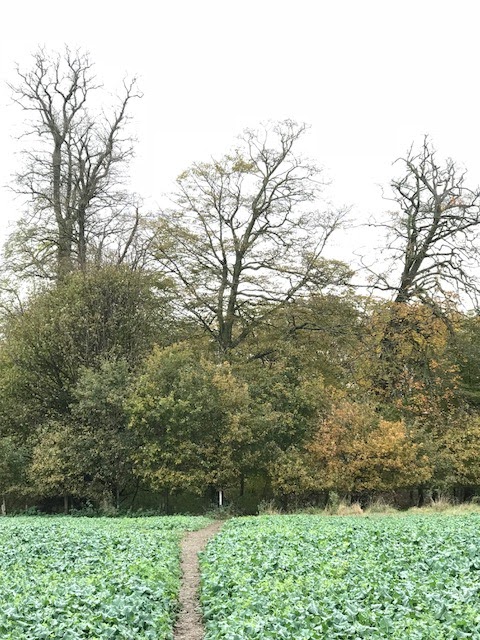

The copse with the footpath running through it. 
The hawfinches were very flighty and moved around the trees constantly and frequently flew back and forth between the hornbeam stands. Sometimes they flew away over the adjacent woodland but always returned within a few minutes. I had a lot of fun trying to capture them in flight with mixed results. At one point I reckoned around 30 hawfinches were flying around together. I've never seen so many at once.


Then our biggest stroke of luck, the sun came out! For just 10 minutes we were blazed in afternoon glory. Now I had a chance of nailing a half decent shot of some hawfinches. They were still at some distance but the camera now had a good opportunity to make up for my own failings. I'm quite happy with a couple of them. 


It was great to watch them since they are normally so difficult to see well. Hawfinches are usually very shy and unassuming finches despite their bulk and are very quiet too so can be hard to locate. These were easy to see though and you could even hear the cracking noises made as they opened the hornbeam keys with those massive triangular bills. We spent nearly two hours watching them and apart from two couples who walked past (and enjoyed seeing their first hawfinches through my scope), we didn't see another soul. Mind you the hawfinches have been present for over a fortnight so most local birders will have had their fill by now.

An afternoon to remember I think and a pretty good day all round despite not seeing a bittern or bearded tit earlier. Mrs Caley and I agreed that if the hawfinches stay around then another visit will definitely be in order, particularly on a sunny day.


Thursday, 2 November 2017

Rock Thrush 'n' Roll! 28th October 2017


The day before leaving for Cornwall a common rock thrush (or rufous-tailed rock thrush if you prefer) was found by a dedicated patch worker in an old quarry near Abergavenny in South East Wales. We'd never seen a common rock thrush so whether to go for it on the Friday became the subject of much consideration in the Caley household. Our plans were to spend the day at Ham Wall in Somerset but this rock thrush was close enough to divert off of our route. In the end we decided to stick with our original scheme and head straight to Somerset. I knew that I'd probably regret the decision but it was made. All that Friday morning I kept checking the bird news, no sighting of the rock thrush by 9 o'clock, nor by 10 and again not by 11. I remember breathing a big sigh of relief and congratulated myself on making the right move since the bird had departed during the night! Then at 11:45 the bird was relocated. Aarghh!!! The situation was quickly assessed, we could drive back to Wales and hope to see the bird and then return to our overnight digs in Devon. But that would be plain stupid (told you I wasn't a proper twitcher) and would mess up our whole day and night. Besides the bird was proving pretty elusive at that time. So we decided instead to go and see the rock thrush if it was still there the following Saturday on our return home from Cornwall. Our good friend Badger, also in Cornwall for the week, is much keener and actually drove up from Perranporth to see the bird and then returned afterwards back to his holiday cottage. Fair play to him! For my part I kept an eye on the birds status all week. It of course remained in place so we'd get our chance. I also kept an eye on the weather and the Saturday was going to be "Storm Brian" day. Typical!

So to last Saturday the 21st October, rock thrush still present and thankfully settled and showing very well most days. No problem then. We drove away from Cornwall in absolutely atrocious conditions, heavy rain and strong winds most of the way through Cornwall and Devon courtesy of said Storm Brian. We pulled off for a coffee at Exeter and the rain eased off and we cheered up a bit believing that we had a chance. The drive through Somerset was made in reasonably good weather although still very windy, we crossed the new Severn bridge and shelled out our £6.70 charge to enter Wales (really!?). Then the rain started again and got heavier and heavier. Driving was treacherous to say the least but we kept going and eventually pulled up at the designated spot where the thrush was showing nearby. On the top of the hill it was howling a gale and the rain was driving in horizontally. Just a second out in it would be enough to drown a cat! We sat in the car for an hour during which time the rain increased in ferocity so we gave up. With over a mile walk to the bird and not wanting to make the remaining two hour drive home in a sorry soaking wet state we drove away somewhat regretfully. Fair weathered birders indeed! So it was back to fingers crossed time again for the following week although I was now reasonably confident that the bird would remain.

And indeed it did, so on Saturday morning we left home at an early hour and made our way West. And it was forecast to be a nice, wind free, sunny morning! Hurray!! We parked up alongside a half dozen or so cars already on site at Pwll-du (Black hole apparently) and followed the track around the hillside.
Tilers this way apparently!
We passed a couple of quarries to our left and enjoyed the stunning views to our right before arriving at the third quarry where the bird was present. A couple of birders we passed told us that it was showing well but was high up on the quarry walls doing what a rock thrush does. As we approached however I saw the thrush fly down and land on some loose rocks at the bottom of the quarry. I quickly checked it through the bins for the tick and then fired off a couple of record shots just in case. I needn't have worried.
Need that record shot just in case!

The rock thrush is first winter male and a very fine looking chap indeed. It blended in remarkably well with the surroundings (understandably) despite its bright orange underparts and if it remained still could be hard to spot amongst the rocks and boulders. We settled in about 50 feet away and watched. The thrush began working its way toward us forcing most of the other birders to move to get a better view. We had the best seats though and at one point the bird must have been no more than 20 feet away. I fired off shot after shot of this lifer for both us.


A thrush on the rocks? Must be a rock thrush!


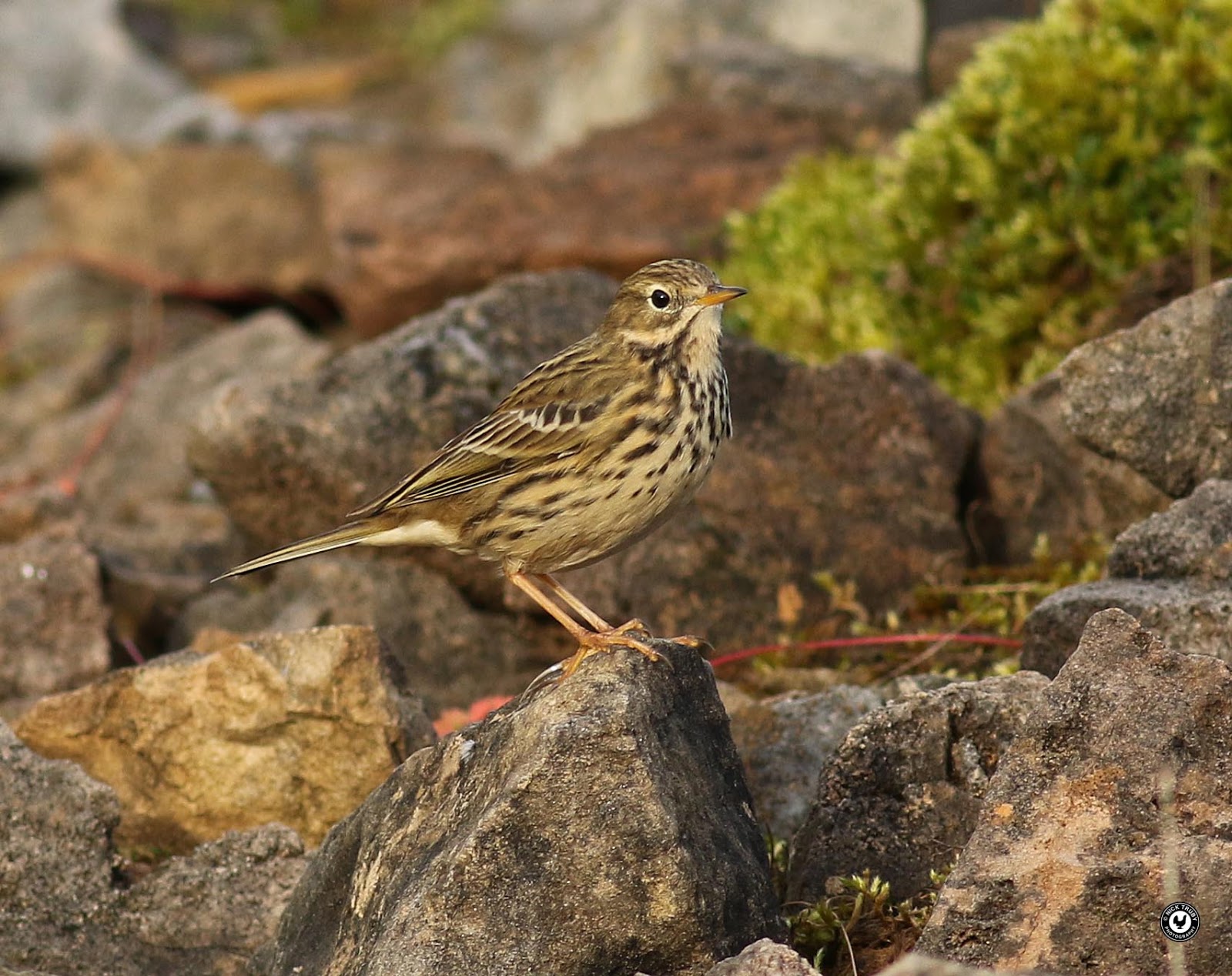
There has been a bit of consternation amongst birders on social media about people feeding mealworms to the thrush in order to entice it to come closer and thus obtain better photographs. Such methods are becoming commonplace and certain birds, the bluethroat in Lincolnshire is one such case, are thought to have been made unwell (and even ultimately killed) by such feeding since the mealworms are not part of the birds natural diet. Furthermore such supplementary feeding methods are putting birders and photographers at loggerheads but lets face it neither much like the other anyway. I didn't see any mealworms being administered to the area nor did I see any on the ground but obviously they could have been there. The rock thrush was certainly feeding well in front of me so could well have been picking up mealworms. A few meadow pipits were also feeding in the same area. I did see the bird locate and eat 3 earthworms so it was quite able to find its own food.


Dinner time!
Meadow pipit


The thrush would feed for a couple of minutes and then rest unmoving for a short while before resuming its feast. At one point a sparrowhawk flew in strongly scattering all of the birds and it pursued a pipit up and over the cliff face but was ultimately unsuccessful. When this happened I thought that would be it and that the rock thrush wouldn't be seen for a while but to my amazement it was stood on the ground hunkered down in the same place in front of us. Maybe it was totally sure on its camouflage to defeat the sparrowhawk, if it is then I dare to say that is one dangerous game to play and I wish it luck!

Sparrowhawk 


Hunkered down after sparrowhawk attack


We stayed for only an hour preferring to leave since the site was getting busier with more and more birders and toggers arriving. I had taken over 250 frames of the same bird! It would take me far longer than an hour to go through them all but I am more than pleased with some of them! 


The rock thrush was a beautiful subject to observe and take memories of. I hope to see another soon.