Saturday, 12 September 2020

There is Farmoor to it! Early August 2020


Tuesday 4th August; No News Is Not Always Good News

friend of ours, Mark had reported seeing a Little Stint, a bird still missing from our year list, on Farmoor 1 during the afternoon. I was working but would make it home by three-thirty and would be on site just a couple of hours after Mark had sen it. Despite the constant disturbance that wading birds are now getting at Farmoor from the continuous merry-go-round of walkers and joggers, I was hopeful that the bird would stay a bit longer. Mark told me that he'd seen the bird, in tandem with a Dunlin, in the north-east corner of the smaller reservoir which would place it right by the waterworks and just a few minutes from the carpark. We arrived at just past four o'clock into breezy conditions, the favoured weather for Farmoor, marched to F1, and to no sign of any wading birds whatsoever! Sometimes, despite best efforts, you miss the birds. Thinking positively though I surmised that the Little Stint could still be around, just pushed off by one of the recreationists, and may be elsewhere on the complex so we started off on a circuit of the reservoir in the hope that we'd find the wading birds in another part. While I walked I checked the excellent Oxonbirding website for any updates and saw that a photo of the Little Stint had been uploaded, which was great to see but equally I was a tad disappointed to see that the photo was taken on Sunday! Later I discovered that the finder of the Little Stint had decided to post the news and photo of the bird solely to the Oxfordshire Ornithological Society's website which doesn't seem to have as big a readership as Oxonbirding, and therefore the record went unnoticed by most. Maybe it was intended as a test to see how many folk look at the OOS page. Guilty of not looking regularly there myself, and not being able to visit Farmoor on a daily basis, any quick dissemination of news helps me enormously, and many others too I would think, to get to see birds. When a sighting is kept quiet or only put out discretely, for no matter how long, then personally I feel it's a great shame since I think all birders should be given a chance to connect with all good birds seen in the county. It wouldn't have taken much effort to post the sighting to Oxonbirding as well. Some will say that it was only a Little Stint but what if it had been something much rarer? Oh well, never mind, as the saying goes.

We walked the whole of the northern side of F1 and our only reward was a Common Sandpiper which in true form flew rapidly away before we could get within fifty metres of it. I still think the Common Sandpiper should be renamed the "Seen You, I'm Off Sandpiper". It is very rare that you get close to a Common Sandpiper at Farmoor.


Common Sandpiper
At the western end of the causeway a Pied Wagtail was involved in taking a bath at the waters edge and appeared to be thoroughly enjoying it. Of course bathing is an essential part of a birds life, cleaning and maintaining flight feathers in tiptop condition is an absolute must for the Wagtail since Sparrowhawks patrol the reservoir banks and the it may need to make a sharp getaway.


Pied Wagtail
Halfway up the causeway we finally encountered some more waders. Two breeding plumaged Dunlin were sauntering along the waters edge and heading towards us. We've learned over the years that when waders are encountered along the causeway the best policy is to sit on the wall and allow the birds to approach you which generally they will happily do if they perceive no threat. Of course sometimes they scuttle off the other way and occasionally take flight and fly around you, and the practice of sitting and waiting doesn't work if there are other folk walking close to the wall. We were alone with the two Dunlin though and they continued to work their way towards us. We had first noticed them close to the apex of the bend in the causeway, the dividing strip between the two reservoirs is convex in shape on the Farmoor 2 bank, so on that side you can only see so far along the embankment. I was still hopeful that the Little Stint would be with the Dunlin since earlier it had been associating with one but sadly it wasn't and it would appear to have left the area. Still the two Dunlin provided some welcome distraction and I added another load of Farmoor Dunlin photos to what is already one of my largest portfolios.


Dunlin
The breezy conditions totally thwarted my efforts to gain any usable images of the Hirundines that were buzzing around at the marina end of the causeway. It would soon be another year gone in which I fail to get a really pleasing photo of a Swallow in flight! Swallows are definitely my bogey subject for photography. Maybe I should take a few hours just trying to get that desired image but that's just not my bag, I prefer to birdwatch primarily and then take my chances with whatever I see. An adult Yellow-legged Gull was helping at clearing away one of the many dead Trout that have been washed up lately, getting its head into the fish in Vulture style.


Yellow-legged Gull


Friday 7th August; Flying Ant Day

Many people hate Ants and on the few humid days at the end of July and beginning of August, when the flying version of the insects emerge in the garden and zoom off skywards to establish new colonies, then one of the most important creatures to the wellbeing of our shared planet, sadly become even more despised. Ants like most other inhabitants of Earth are vital to the ecosystem that keeps the status quo in place, it is us Humans that are detrimental to that. I actually look forward to flying ant day, except for the heat and humidity since I prefer it much cooler and fresher, not only for the spectacle the swarming insects present but also because I know that some of our resident birds eagerly await the mass dispersal too. The birds of course don't watch the insects for pleasure but instead take advantage of one of natures bounties and take to the air to grab a tasty snack or two. 

Above our house the sky was filled with maybe a hundred Starlings that were launching off of the surrounding trees and roofs whenever an ant passed close enough to snatch. Higher up there were also a few Swifts, a flying Ant would be no match for them. Some Gulls, mainly Black-headed but also a few Herring, were also joining in the feast. For an hour or so I tried, and largely failed , to capture some images of the Starlings in flight and "in the act" of capturing an ant. It isn't easy to photograph birds flying above my back garden because the surrounding houses and trees limit the amount of sky on view but I had fun anyway. I didn't manage to obtain any award winning photos, nor do I ever really, but I'll share a few anyway.


Common Starling


Saturday 8th August; Back Farmoor!

The Little Stint hadn't been seen again at Farmoor during the week but with wader passage in full swing now we headed back to the reservoirs on Saturday morning. For a change the gates were open early and we were able to get in without the masses that would turn up around ten and eleven o'clock. Farmoor is so much better when the boats, fisherman and other folk haven't arrived. I prefer Farmoor on dull, even wet days when I know fewer people will bother with the place since it's not very welcoming in dreary conditions. However today was promising to be another warm one but at least it was breezy which would help to cool us down a bit.

A Grey Heron, standing guard on the marina railings, welcomed us in and a Yellow-legged Gull, which had chosen what looked a bit like a dead Turtle to stand on, but which was actually, I think, a piece of washed up felt, eyed us suspiciously as we passed. I like adult Gulls, it's the juveniles that bug me since they are so hard to identify. 


Grey Heron
Yellow-legged Gull
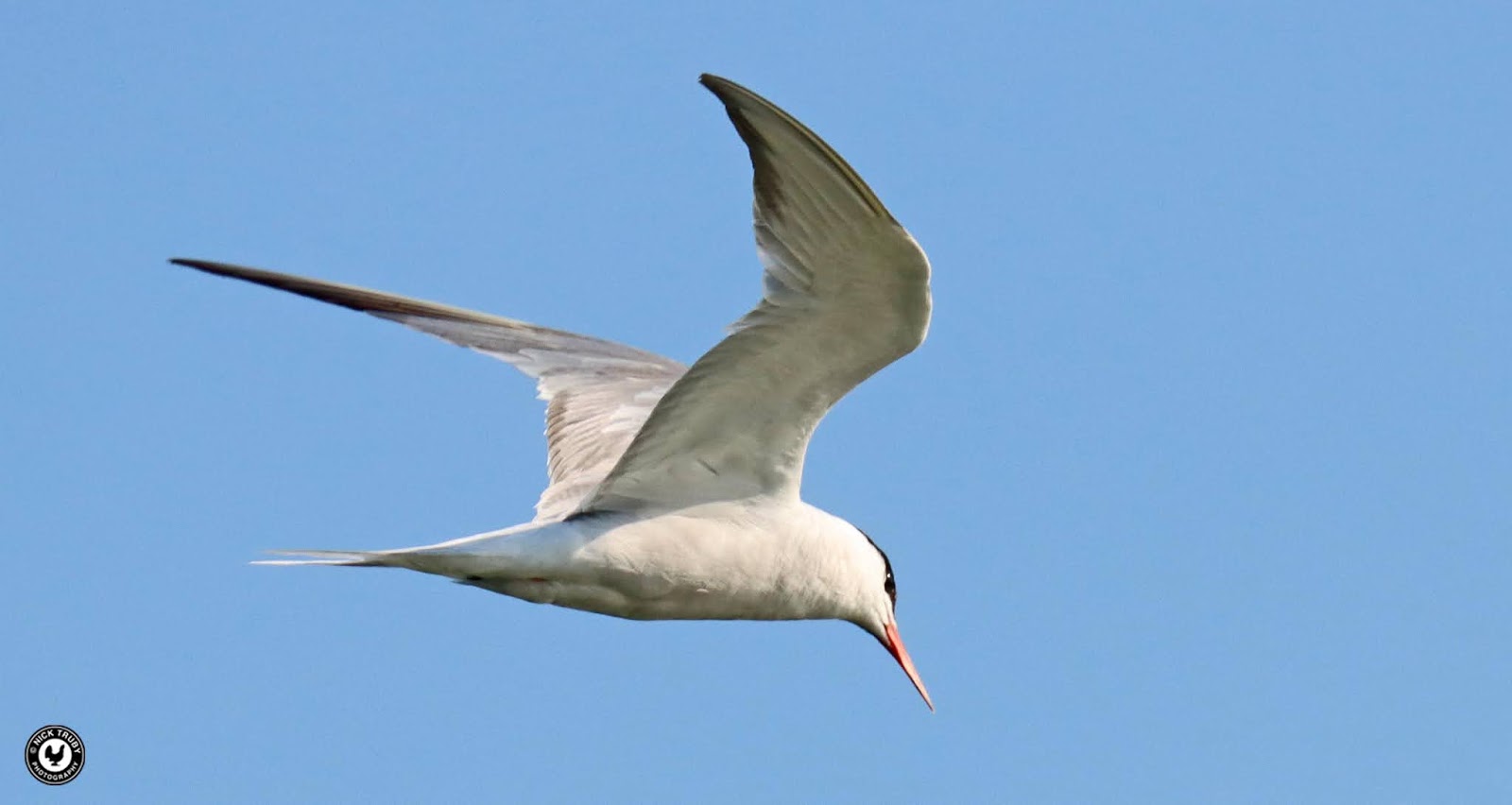
We met a couple of our friends and passed the time of day for a while. Top of the agenda for discussion was the goings on both at Farmoor and in the county in general and "Little Stint Gate" was debated in detail. Ewan had already walked the causeway and reported that all he'd seen was a couple of Common Sandpipers and a single Dunlin. Wading birds can come and go at Farmoor at any time though so there was a chance that we'd find something different on our walk. We set off down the causeway into the breeze, which was welcomed because the beautiful blue sky foretold of the warm day to come. A Common Tern passed overhead but I was a bit slow in aiming the camera. We've seen very few Terns this year, having Farmoor denied to us in the spring meant we missed the northwards passage. We are still waiting for our first Arctic Tern of the year and in all likelihood will not see one now in 2020. At least we had managed to add a Caspian Tern to our life lists last month.


Common Tern
Little Egrets have been seen a lot recently around the reservoir, usually in the vicinity of the pontoon at the western end of the causeway. As we walked, we failed yet again to sneak up on one of the Common Sandpipers, they are such wily birds, I spotted a Little Egret flying directly towards us. We stayed sitting on the embankment wall and with the bird hide at our backs it seemed as if the Egret didn't register that we there since it continued to make a beeline straight for us. It only clocked us when it was right on top of us, veering away at the last moment but still passing just metres away, allowing me to take probably my best photos of a Little Egret in flight so far.


Little Egret
The walk to the other end of the causeway yielded no waders at all so it seemed as if this walk would be one of those fruitless ones that you often get in good weather at Farmoor. The sunny conditions also meant that there were no Hirundines or Swifts to see either. We took a quick detour to the river and sat for a while on a bench, watching Reed Warblers flitter around in the reeds on the opposite bank. Most of the bird interest on or near the river has subsided now, the Cuckoos and Grasshopper Warblers have either left or quietened, so it was just left to a lonely and sad sounding Reed Bunting to provide a background chorus. A Raven passed high overhead calling raucously and by the moored narrow boats at Pinkhill Lock, and a Wood Pigeon gave me a photographic opportunity as it fed on elderberries.


Wood Pigeon
Returning to the reservoir and the causeway we were relieved to see that it was still quiet with far fewer people milling around than in recent times. We had only gone a short distance past the pontoon, again the Common Sandpipers were too quick for me there, when Mrs Caley spotted a small wading bird at the waters edge. It was the Dunlin, somehow it had given us the slip first time around, but now it was feeding along the embankment of F2. We sat down on the wall and waited for the Dunlin to come closer which it duly did and we got excellent close up views once again of the most confiding of our wader species. Perhaps it could have a word with the Common Sandpipers.


Dunlin
We watched the Dunlin, a juvenile bird so not one of the ones from Tuesday, for a while, at one point it scuttled along the concrete right beneath us, paying us no real heed at all. I  have lots and lots of photos of waders taken at Farmoor and a large proportion of those feature the rather ugly concrete strip that lines the reservoir. Therefore I always try to get shots of the birds stood in the water or at least on some of the algae and vegetation at the waters edge. Of course the success of that depends on the birds themselves and whether or not they fancied paddling. This Dunlin was semi-obliging on that score.


The Dunlin had approached so closely that we could actually see the foodstuff it was garnering from the algae covered concrete, none of which looked too palatable to our eyes but all of which was dispatched with no lack of zeal by the Dunlin. Like most wading bird species Dunlins make long migration journeys, so stopover sites like Farmoor are vital places for them to refuel on those travels.


A couple of Common Sandpipers whistled past and I at least managed a record shot of a part of them other than their backsides as they passed. Ewan had told me that there was a particularly confiding Common Sandpiper at the reservoir right now but up to now I hadn't come across it and the ones that I encounter continue to be of the "Seen you, I'm off" variety!


Common Sandpipers
A little further on another small wading bird flew across the causeway a short way ahead and dipped over the wall of F1. I scanned the concrete apron and spotted a Sanderling stood on one leg about thirty metres away. Wanting to put the sun to my back we skirted around the bird by walking up the opposite side of the road and looped over to the wall so that we were a similar distance away from the bird on the other side. It soon became evident that the Sanderling wasn't actually resting on one leg but could only use the one since the other was lame. 


Sanderling
The Sanderling didn't appear overly hampered by its disability though and was able to hop on its one good leg and pick flies and such from the waters edge. It also fluttered short distances along the waters edge which brought it nicely towards us. Sanderlings are one of my favourite wading bird species and this year has seen a good passage of the birds at Farmoor. Our audience with this one was to be brief though since a couple walking up the causeway soon had it flying off again. Disturbance of birds owing to the increased popularity of the reservoirs for recreation purposes is becoming a huge problem, both for the birds themselves and also for us birders.


The amount of people around by mid-morning was too much for us and we made our way back to the car. I stopped to admire three Yellow-legged Gulls at one end of a raft and a Cormorant at the other. There appeared to be a bit of animosity between them and each party was watching the other intently.


Yellow-legged Gulls & Cormorant
A Common Sandpiper which must have seen somebody else before us, actually flew past reasonably close for a change but naturally kept going. When it landed at the marina end of the causeway it was soon flying off again when more people got too close to it. It's not just us that they don't like then. It really is hard work for the wading birds at Farmoor these days.


Sunday 9th August; Ruddy Listing Hell!


Ducks can be a nightmare, not in a scary sense but in terms of whether they are genuine or plastic, and by plastic I don't mean plastic as in actual plastic but more as in unreal or unauthentic. Confused? Yep, I am too, but welcome to the world of Ducks and whether they can be accepted as genuine wild wildfowl or non-genuine non-wild wildfowl. Examples of plastic ducks, other than those found at the end of your bath, are escapees from wildfowl collections that wander around either by themselves or in feral flocks, or birds that have evolved from reintroduction schemes that take place frequently around the globe. There are so many grey areas revolving around the world of ducks that I personally find it bewildering and why my lists that I keep don't adhere strictly to the rules of listing. To my own aims, a bird that I see living wild and free, unless it is an obvious escape from captivity, is fair game particularly if I've had to make an effort to see it. Certain species of ducks attract conjecture and raised eyebrows, Ferruginous Duck and Baikal Teal being two prime examples. So many records of ducks, that have seemingly strong cases for recognition, are thrown out by the listing and record authorities whereas others are accepted even if the evidence is less appealing. It's very confusing and often I think that the basis for acceptance of a certain duck sighting and record comes down to whether members of the adjudication panel have seen it for themselves or not!

Another species of duck that is generally considered as being plastic and therefore uncountable on proper lists is the Ruddy Shelduck. I've seen quite a few Ruddy Shelduck before and I've always counted them on my year lists. Indeed some have been accepted as being true Ruddy Shelducks in the past, but others have been deemed as artificial and consigned to the bin. The reintroduction schemes have also helped to muddy the waters further. Last year I actually twitched one in Lincolnshire so that I could get it onto my year list, not specifically since we had gone up there for a Pomarine Skua, a claim and addition to the list that attracted quite a bit of scorn from some of my peers, not that I cared since I had seen it anyway. 

A few days before a flock of nine Ruddy Shelducks had been found resting on the Queens Pool in Blenheim Park, where you'll find Blenheim Palace, near Woodstock. The flock of nine had also been seen previously in Somerset and originate from a reintroduction scheme on the Germany/Switzerland border where a large non-self sustaining feral flock has become well established. Apparently this places the birds in category E of the British list, truly wild birds are in category A, B or C. For more information on the listing principles see the BOU website. Alternatively stick your head in the sand, like me, and happily get on with your life.

We decided that we'd go and see the Ruddy Shelducks early on Sunday morning and avoid the late rising tourists and other recreationists, that plague any available bit of parkland or beauty spot these days. As we approached the Lake I scanned from a distance and instantly saw the Ruddy Shelducks, no problem then and, as far as I'm concerned, our 204th species of this year. I could see another birder walking close to the edge of the water but didn't recognise him from where we were. By the time we reached the Pool edge the Ruddy Shelducks had disappeared and I cursed under my breath at the other birder for scaring them off. The birder turned out to be Mark again, and of course he hadn't flushed or scared the birds at all, they had just swum into a small inlet of the pool but couldn't be seen from where we stood. Mark had arrived a while before us and had initially found the birds on the main lake but they had then flown to the smaller pool to which they had been faithful since arriving during the week. By walking a little further on we were able to see that the whole flock was stood preening in the shallow stream.


Ruddy Shelducks (7 of 9)
We chatted to Mark, about birds, music and just about everything else. When we looked back at the pool the Ruddy Shelducks had disappeared again and I wondered how they managed to move without being seen? An invisibility cloak maybe? A lot of birds possess those. A look slightly to the right though revealed that all of the Shelducks were now swimming in clear water and not so far away. Ruddy Shelducks are well named, they are a reddish colour overall, the head is a shade or two lighter, and they are a type of Tadorna, the posh latin name for Shelducks. Shelducks are actually more similar and closely related to Geese than Ducks but for some reason the old ornithologists decided on Shelduck rather than "Shelgoose". Wildfowl are not the most exciting types of birds to observe, they tend to float around on the water not doing very much, so it doesn't take long to want to move on. The Ruddy Shelducks weren't likely to come any closer so we all headed off to our cars. Just as we left, I noticed Justin stood at the other side of the lake. Being one of Oxfordshires premier listers, it was interesting that he'd bothered to come and see the birds and added a little bit more validity to the sighting. He did say later that they are category E birds at best and wouldn't be getting elevated to a higher status just yet.


With Farmoor just a few miles away, it made perfect sense to drop in there again and have a quick look at what was around on the causeway. We took our time, the reservoir tends to be less busy on Sundays than Saturdays, and drank a coffee from the marina cafe which through necessity can only serve outside and resembles a school tuck shop. It was a nice coffee though and while we sipped I scanned F2 for any Black Terns or Little Gulls, wishful thinking on my part, or anything else that might be around. Ewan was there and he joined us for a chat. He said there was little about but that the approachable Common Sandpiper was showing particularly well at the marina end of the causeway on the F1 side so maybe I would finally get my chance to get some decent photos of it.

The Common Sandpiper was indeed feeding along the edge of F1 just fifty or so metres from the marina. We employed our usual tactic of walking past the bird by using the opposite side of the road so that it wouldn't see us pass and ducked in carefully behind the wall. We also had the advantage of having the sailing club hut behind us which served to break up our outlines. Then we waited for the Common Sandpiper to approach us which, for once, it dutifully did, and I got the photos that I'd been trying to get for a while. The Sandpiper came close enough for us to even see the minuscule titbits that it was eating! I'm now going to have to revise my name for the species at Farmoor.


Common Sandpiper
The love in with the Common Sandpiper was ended when it was spooked by a less stealthy birder, who should be congratulated at being able to move less nimbly than I do, and flew off across the reservoir, I doubt the other chap even saw the bird until it took flight. In his defence the Common Sandpiper was well camouflaged and not immediately noticeable, well not if he wasn't looking and paying attention anyway. Perhaps he thought he'd save me some memory space on my camera. We strolled a bit further along the causeway but as Ewan had already told us, we knew there was nothing else around to get over enthused about, so it was a half-hearted amble really. I stopped to admire and photograph a Carrion Crow that had been disturbed off its Rainbow Trout breakfast by a rampaging Windsurfer who crash landed at the edge of F1. Carrion Crows are one of those species of birds, like Wood Pigeons and Cormorants that most folk, birders included, don't bother looking twice at. Seen in good light and close up though they are rather beautiful in their own right possessing a myriad of petroleum blues, purples and other colours in their plumage. This bird was a juvenile so was more brown toned but still a handsome looking specimen in my eyes. 


Carrion Crow
A Cormorant flew closely past and I took the obligatory few frames of a Cormorant flying past. We then noticed some unusual behaviour amongst a flock of Cormorants further out on F1. About twenty of them were all swimming in the same direction, seemingly led by a lone bird at the vanguard. All of the pursuing birds were pointing their heads and bills up in the air as if they were all watching their rivals while the lead bird eyed up the others by glancing backwards. I wondered what was going on? Were they about to start a race in the style of the sailors on the opposite reservoir? Or was it a game of follow the leader? Did the lead bird know where the best fish were? I hoped it wasn't twenty male birds following a lone female. I searched online for details of the behaviour but could find no reference to it so maybe I'll never know what was actually going on. Where's Dr Dolittle when you need him?


Cormorants
We didn't go any further than the bird hide and returned to the marina for a second cup of coffee. Whilst there I took more obligatory photos of a Great Crested Grebe that floated in close to the bank, well you can never take enough photos of such beautiful birds can you?


We had had a really enjoyable week, and the weekend especially, birding locally despite dipping out on the Little Stint. Our wanderlust was growing though and as we finished of our beverages we discussed where we'd go next. And we could hear that Vulture was calling us again.


Sunday, 6 September 2020

Oare What? 1st August 2020


End of July: Racy Walter!

During the week we had an unusual visitor to the garden in the shape of a Racing Pigeon. We've had Feral Pigeons before but this is the first Racer. Seemingly very tame, Walter as we christened him  (of course Walter could have been a she), would allow close approach but wouldn't allow capture always flying up a few feet off the ground and landing a bit further away if you got too close. He spent four days from Tuesday helping to clear up the spilt seed from the bird feeders. In between feeding he'd sit on our roof gazing down at us if we were in the garden. He wore a ring which identified him as a young bird and research on the internet revealed that young Racing Pigeons are prone to making short stopovers before continuing on their way back to their home lofts. After he left we rather missed his amiable ways around the garden.


"Walter"


1st August: Bunch of Kents

We were in need of some different birding and some decent birds so I had studied what was available in the days leading up to the weekend. In truth there was little around either locally or nationally. After last years big effort on building a year list, this year we had decided that we wanted to add new birds to our life list and would only travel large distances for those rather than for birds we'd seen before. Obviously there are some birds that are desirable and are good to see whenever the opportunity arises but for most of this year, admittedly made easier by the Lockdown, we had so far managed to stick to our guns and had primarily only travelled out of our immediate area when twitching lifers. However, in the absence of anything new to twitch and with so little happening locally, on Saturday morning we decided on a whim to drive into Kent and to Oare Marshes, a place where we'd never been before, and where there were a couple of scarcer birds that we could add to this years list. Besides we always enjoy a trip out. 

I've never enjoyed travelling to Kent, or Essex or indeed any of the places lying to the east of London because getting to those counties normally requires driving along the M25 and having to take our chances with the zillions of other road users. Therefore we've always limited our trips into Kent despite the fact that whenever we've been there we've always seen some good birds because the county is very good for rare and scarce species. We saw our first ever Pied-billed Grebe, Long-billed Dowitcher and Blue-winged Teal on one of our first ever twitching days in Kent back in 1997 and a few years back while in Kent to attend a wedding, I self found a Black Stork. Last year we made a December journey to the county to add Shorelark and Tundra Bean Goose to the 2019 year list. Many folk had told me about Oare Marshes, and the fact that birds are usually close to the road sounded appealing enough. It is also the summer residence for a Bonaparte's Gull which would be a nice addition to our year list.

We left a bit late by our standards, again, and didn't arrive at Oare until just after ten o'clock. It was a warm and sunny morning as I pulled the car into the lay-by that overlooks the scrape. I had researched into the site and discovered that very helpfully you could watch from the lay-by. Little did I realise that you weren't actually supposed to park there, and might explain why I got so many sour looks from the regulars! What my research hadn't told me was that at ten in the morning you'd be looking directly into the sun which was strong in the clear air and created the dreaded heat shimmer. It was true that some birds were close to the road but most were further out on the shallow scrape and viewing was difficult owing to that heat haze.

I began by studying the birds closest to us which were stood or sat on a muddy bund about thirty metres away. Most of the birds there were Gulls and the majority of those were Black-headed Gulls but scanning revealed half a dozen Mediterranean Gulls, a year tick and our 200th species for the year. Considering how common they are in much of the south of England, Mediterranean Gulls are surprisingly hard to come by in Oxfordshire, the last ones I found were attempting breeding on Otmoor last April, so it was good to see so many here.

adult Mediterranean Gull (standing)
Beyond the Gull covered spit was an area of open water which was full of more Gulls, again mainly Black-headed Gull but also this time with some Common and Herring Gulls. Further out, using a muddy sand bar to rest on was a huge flock of Black-tailed Godwits and other wading birds, such as Redshank, Lapwing and Avocet. It was clear to see why Oare was so highly regarded as a birding site and, not for the first time in my life, I wondered why I bothered to remain living in Oxfordshire and flog relatively bird poor places such as Farmoor for my wading bird fix. The downside to birding at Oare though was the attitude of some of the local birders who appeared to be a quite unhelpful bunch and who fended off my questions, of what was about, with put-me-downs and disinterest. Maybe I had just chosen the wrong bunch to ask and I quickly realised that Mrs Caley and I were on our own, and that I'd have to find the two scarcer birds that I'd come to see by myself. Perhaps it was my ignorance of the parking situation that had worked against us.

Oare Marshes & the Black-tailed Godwit flock
We were looking for the Bonaparte's Gull of course and also a Lesser Yellowlegs. I had never seen a Bonaparte's Gull outside of Oxfordshire before, there are not many birds that I can say that of, and thanks to sustained views of a brilliant adult bird at Blenheim last year, I knew exactly what to look for. Except that the Blenheim bird was largely flying around and we were looking at hundreds upon hundreds of stationary birds of which most were asleep with their heads tucked away. The two easiest identification marks that I knew of the Bonaparte's Gull was its smaller black bill and shorter bubblegum-pink coloured legs, neither of which would be visible if the bird was lying prone on the ground with its bill hidden in its back feathers! I spent a good fifteen minutes searching through all of the Black-headed Gulls that I could see and couldn't find the Boney's. Frustration was beginning to mount.

Luckily my search for the Gull had at least revealed the Lesser Yellowlegs which was actively feeding on a muddy strip in front of a reedbed beyond a large group of resting Gulls. Because of the heat shimmer the elegant wading bird wasn't easy to observe or photograph but I've seen a few now so knew that I had the right bird. Lesser Yellowlegs are superficially similar to the ubiquitous Redshanks that were here in numbers, but are more rakish with a longer neck, finer bill and, of course, yellow rather than red legs. I think they more resemble Greenshanks, of which there were a few here, but Greenshanks are more bulky with a stouter slightly upturned bill. I had seen some excellent photos of this Lesser Yellowlegs online but I was going to have to make do with record shots.


Lesser Yellowlegs
Record shots would prove to be the order of the day, the radiant sunshine aiming directly into our faces and the attendant heat shimmer destroying all of my efforts at gaining any decent photos. My good friend, Mark aka The Early Birder, told me once that you just can't expect good photos on very hot days unless you are close to your subject because if your own vision is affected by heat haze then by extension a camera will be too. I will remember, if I choose to visit Oare again in the future, to make it on an afternoon or on a dull overcast day. At least I don't subscribe to the true Togger spirit of complaining about the "lack of light" and if I ever do then please give me a slap.

Back to this story, a very helpful Marsh Harrier flew closely past, not close enough to get a photo of course, it was a Marsh Harrier after all and they just don't pose for Old Caley, and all the birds forgot their slumbers for a while and shuffled their positions a bit. In front of the Lesser yellowlegs was around a hundred or so Black-headed Gulls and when they were all stood nervously eyeing up the potential threat of the Harrier, at the right hand side and almost obscured by a clump of reeds was the Bonaparte's Gull! It had just materialised in front of us and must have been there all the time. I checked the Gulls credentials through my scope a few times and satisfied myself that it was the target bird. The thin black bill and pink legs obvious now it was stood up and awake.

Bonaparte's Gull (& Dunlin)
We watched the Bonaparte's Gull for a while, sharing it with some other, more friendly, birders that arrived. To be fair it didn't move far, maybe a few feet further away from the reeds and into open water where it spent time preening. Another threat, unseen by us, startled the Gulls again and a new order to the flock ensued, but now my eye was in, it was easy to remain fixed on the Bonaparte's Gull. The last view we had, was of it attending to its feathers while all other Gulls in its vicinity went back to their collective repose. Now we could see it well, it was obvious that it had a darker blackish head, which it had only just started to moult, than the Black-headed Gulls, which of course have brownish head feathers, something that I should have remembered to use as an identification aid earlier when searching through the sleeping birds. Another important thing to remember for future.


We had found other birds during our stay, our first Spotted Redshank for the year was seen way out beyond the Godwit flock, just about discernible through the scope as it fed in the deeper water. Half a dozen Golden Plovers were gathered on another sandy spit way out on the marsh along with more Dunlin and Avocets. We also found a few Ruff and Ringed Plovers as well as a Water Rail and Little Egrets. Oare Marshes appears to be an excellent site and if we had the inclination we would have stayed longer and looked for Bearded Tits and the like in the reedbeds but it was far too hot for us and the breeze had picked up considerably, determining that seeing anything in the swaying reeds would be very tricky. 

The almost three hour drive home reminded me why I don't bother with the M25 unless I really have to!


Thursday, 3 September 2020

Back to Basics and Local Birding. End of July 2020

25th July; Green Matters


With little happening on the birding front nationally and in need of a quiet weekend after a busy time at work and the longish drive to see the Lammergeier yesterday, our Saturday birding was limited to just an hour or so at our local reserve, Bicester Wetlands (BWR). So far this year we've been guilty of largely ignoring the oasis of calm on the edge of our ever growing and bustling town. Lockdown meant that for a while BWR was out of bounds since we weren't allowed to drive there and it's a five mile round walk to get there and back with just uninspiring, depressing in fact, concrete and brick to look at on the way. Hence we had chosen to take a farmland walk to Ardley Quarry, just as far but much nicer, as our staple during March and April. Then when more mobility was allowed we got back into Otmoor, spending a lot of time enjoying the solitude, tranquility, the emergence of spring and the newly arrived birds out on the Moor. So our call in at BWR was actually our first proper visit to the reserve since February!

Luckily we have a very dedicated warden of BWR. Alan had kept an eye on the place almost daily, as he always does, and had provided constant updates on what birds he'd seen during the past few months. It had been quiet in general and in truth we hadn't missed much but over the previous couple of weeks Green Sandpipers had returned in numbers to the shallow reed fringed pools. BWR is the primary spot for Green Sandpipers in Oxfordshire and they are present in most months during the year. A few days before Alan had counted eighteen on the reserve and just yesterday they had been joined by a Greenshank.

It was a drizzly dreich day as we parked up by the Tower Hide overlooking the main pool. The pool itself was largely empty of birds, testament to the large scale work that was taking place at the adjoining water treatment works, a growing town needs a bigger waste management plant. So we walked across the rough field to the Cattle Bridge Pool and the relatively new hide there, where we imagined the wading birds would be. Approaching the pool is difficult without scaring any birds away because the natural hedge screen is yet to grow tall or dense enough and the steps up into the hide are exposed but we did our best. We opened the hide windows and looked out on absolutely nothing! Not a single wading bird, or any bird for that matter, at all. We'd just have to wait and see if the Sandpipers would return and since it had begun raining heavily outside it made sense to sit tight anyway. Less than five minutes later I heard the high pitched tri-syllabic call of a Green Sandpiper and then two of the compact sturdy thrush sized waders landed in the shallow pool. They looked around nervously for a few moments then began feeding.

Green Sandpiper
After my rather muddled thinking in a previous blog about why do we have birds named with the prefix, 'Common', I also often wonder why we call some birds by colours that they clearly are not. Green Sandpipers never look green, at least they don't to my eyes, and are in fact more blackish or maybe dark brown. Of course the purists will say that they are greeny-brown but if that's the case why aren't they called Greeny-brown Sandpipers? I know, I'm being pedantic again, but surely the colour blind ornithologists who named this bird could have come up with something better. The Greenshank, one of our UK birds that has managed to shake of its Common tag, flew in and joined the pair of Green Sandpipers. It too was wary at first before proceeding to feed. Courtesy of its longer legs it was able to stride slightly further out from the edge of the pool. Greenshank means 'green-legged' and for the life of me I have never seen a Greenshanks legs as green. They are grey. Okay at a push they are greeny-grey but they're not green not in the sense that I know green, eg grass green or lime green. Why wasn't it called a 'Greyshank' or a 'Green-greyshank'? I apologise for even more ridiculous over exacting.


Greenshank
Over the next hour another six Green Sandpipers flew and joined the others and we watched them all either feeding or at rest on the muddy edge to the pool. Hopefully the shallow water and the healthy amount of exposed mud will attract a rarer wading bird to the reserve over the next few months. 


We tend to think of a Greenshank as one of our larger wading birds and conversely of a Black-headed Gull as one of our smaller Gull species, of which both is true. But see both birds stood in close proximity and you realise just how much smaller the Greenshank is of that pair. And yet it towers above the Green Sandpipers. Not proof of anything but when you consider how much bigger a Green Sandpiper is compared to Dunlin and the like then you get to appreciate just how small they are. Incredible then that all of those wading birds travel so far on their migration journeys, thousands of miles every year.

Black-headed Gull & Greenshank
Greenshank & Green Sandpiper
The Swifts and hirundines that were using the pool for in-flight drinking also travel long distances and most will be leaving for their wintering grounds in southern parts of Africa soon. The hide is too far away from the water to enable getting good images of them though. There was a break in the weather so we seized our chance and went for a restful rest of the day at home. It felt good not having a two hundred mile drive home for a change!


26th July; Fir the Love of Woods


Crossbill, is another bird that has generally managed to shed it's Common prefix unless being compared to the much rarer species in its family such as the Parrot and Two-barred varieties. In keeping with many "common" birds, they are not that common in our area so don't really deserve that common moniker and "Scarce Crossbill" would be more accurate. They can be hard to find owing to their quiet habits and the fact that they generally rely on conifer plantations and forests for their food trees, they are pine cone specialists, none of which are plentiful in Oxfordshire. We had already tried to find some in one of the more reliable spots, at Buckland Warren near Faringdon, without success earlier in the year and thus they were missing from our year list, again normally we would have seen them in Scotland on our holiday but as you will know by now, coronavirus stopped that from happening. A friend and fellow birder Jon, famous locally for finding the Red-rumped Swallow at Grimsbury Reservoir last May, recently posted on Twitter about a flock of Crossbills that he'd found in Bucknell Wood near Silverstone, in Northamptonshire, just twenty miles away from home and actually closer than the Oxon site. To my shame I had never visited Bucknell Wood despite driving past it countless times while working in the surrounding area. The wood is famous as a site for seeing Purple Emperors and other unusual Butterflies in the summer but not being that bothered with small fluttery things, seen one you've seen them all, and having Bernwood Forest (oxymoronic name, maybe not, but unusual to have two words that essentially meant the same thing next to each other) on our doorstep, even those have never pulled Mrs Caley and myself in. 

Crossbills though do have that pulling power and after gaining some information on the likely spots within the wood to find them we set out early on Sunday morning, arriving just after half past seven. Only one car was already parked although another arrived just after us. Any wood with good paths attract dog-walkers these days which is fine with me as long as the dogs are kept on leads and their waste is cleaned up but unfortunately too many are left to maraud at will through sensitive habitat and wildlife no doubt suffers as a result. I do not have a lot of time for irresponsible dog owners. Thankfully the two chaps kept their charges in good order but still managed to shatter the peacefulness of the wood and the trees by talking ever so loudly. Why do people have to shout when they're in quiet places? We waited a couple of minutes to allow the two guys to get well ahead and then followed up the path. As it was there was little to see and hear, most birds would be busy feeding broods now, and the trees here are big and very leafy so any birds would be hard to find. Jon had pointed us towards the belt of Larch and Spruce at the top of the wood about half a mile from the car and where the Crossbills should be.

We reached a crossroads of paths and stood enjoying the early morning sunshine. To the left a path ran straight through a stand of conifer trees. I scanned the tops of the nearest trees and was amazed to instantly spot a couple of Crossbills in one of them. I do love an easy "twitch"! I took a couple of record shots just before the Crossbills exploded noisily out of the tree, astonishingly eight of the chunky finches flew out of the tree and the one next to it and I had only noticed two. When I studied the photos later I saw that they contained four of the eight!


The birds had flown back into just a few conifers that stand by the path that we'd just walked up. I know from experience of watching lots of Crossbills in Scotland that they are birds that rarely stay still for long and are always flying from one tree to another, sometimes into a nearby tree but also often to trees much further away, thus they can be frustrating birds to follow. When they move, whether as a flock or singularly, they frequently call excitedly and often the first indication that Crossbills are present is when you hear those calls. I re-found the Crossbills and saw that the small flock contained a couple of males, not quite in brick-red breeding plumage but still "in the pink". I had to peer through overhanging branches to get a record shot.

male Common Crossbill
The birds took flight and amazingly were joined by more that must have been already feeding in the trees. I took a quick count as they all flew off and reckoned there were over twenty but my attempts at grabbing a photo failed. The whole flock of Crossbills had flown well into the woods and were lost from sight so we rejoined the cross path with the majority of conifer trees and enjoyed the stroll in the early morning sunshine. A Roebuck was also out and about and stood on the path just fifty metres ahead eyeing us up slightly less suspiciously than usual, before slinking off into the wood.

Roe Deer
We heard the Crossbills again, looked up and saw the flock passing overhead. I reckon that there were about twenty-five but without getting a static photo I couldn't be sure of the exact number. In any case it was a good sized flock and was in keeping with other gatherings being seen up and the country, except in Oxfordshire of course where there were none. Lots of Crossbills had been observed migrating southwards over the last month or so and some had obviously stayed put in the UK. The Crossbills had landed en masse into three very tall trees about a hundred metres ahead of us so we made our way there. Here they seemed settled and were feeding on the small cones borne by the fir trees, I don't do trees, although I know that I should, so don't know what exact type of tree. 

juvenile Common Crossbill
The flock of Crossbills were noisy while feeding and moved around the trees frequently, presumably seeking out the best cones. Most were of the green-grey female type with quite a few juveniles mixed in and I only noticed just the couple of males. As far as I could tell they were all staying right near the top of the trees so getting decent photos was difficult with the reach of my lens.


A female descended lower on one of the trees and afforded us better views. It was joined by a couple of juvenile birds but despite much pestering they were ignored by the older bird. Now I had a better photographic opportunity.


female Common Crossbill
There were Siskins as well as Crossbills in the woods, the two species are often seen together since they are both conifer tree specialists. A small flock of around ten Siskin were at the top of a nearby tree and I paid them some attention. Siskins can also be hard to find in Oxfordshire, the last I saw in the county was back in February at Dix Pit, so it was good to see some here in Northants. There were frequent squabbles amongst the Siskins and a couple flew out in a fluttering tumble.


Siskin
The Crossbills disappeared off into another part of the wood again so we resumed our walk, noting lots of common woodland birds along the way. Jon had told us that the wood was a good spot for Spotted Flycatcher but we failed to find any but to be fair our interest lay with the Crossbills so we didn't leave the conifer stands. We saw the Crossbills for the last time back in the trees where we first saw them. The wood was becoming busy with many dog-walkers, some not bothering to leash their dogs and when a Roebuck appeared again it was chased by a Labrador into the undergrowth. Why can't some people act responsibly and keep their dogs under control. When a noisy family came walking towards us carrying take away coffees and milkshakes then it was time to go. I just sincerely hoped that the plastic cups were taken home to be disposed off in a bin and not discarded as litter although I had my doubts. It puzzles me why folk with no interest in nature choose to visit nature reserves and act so selfishly with seemingly little or no regard for the beautiful surroundings in which they walk or for the wildlife that lives there.